Why Florida Bank REO Is a Different Animal
Florida REO commercial acquisitions are not just “cheap deals” — they are regulatory events inside highly supervised institutions. You are stepping into a workflow shaped by OCC bulletins, internal loan review, and a board of directors that must defend every loss number to examiners. That's why “just send me your REO list” emails never get a serious response. You have to speak their language — credit, capital, and regulatory relief.
Florida is a judicial foreclosure state, which means commercial foreclosures frequently run 18–30 months from default to sale in many counties — longer when there are contested defenses or environmental issues. That lag, layered with documentary stamp tax on deeds and note transfers, property tax delinquencies, and Florida's insurance shock on coastal and wind-exposed assets, creates large bid-ask spreads between what a special assets officer wants and what a rational buyer can underwrite. The investors who consistently win here are the ones who treat “process friction” as a pricing lever, not a reason to walk away.
Along the I‑4 corridor — Tampa, Lakeland–Winter Haven, Orlando — population growth, in-migration of corporate users, and logistics demand are strong enough that even distressed office, retail, and hospitality can pencil if bought at an appropriate basis. The banks know this; your job is to show them you can remove non-performing exposure in a way that will stand up to their internal audit and OCC exam files.
Where Florida REO Actually Sits Inside a Bank
Most Florida banks do not run REO through the retail “properties for sale” page — they manage it through special assets, credit administration, and in some cases a dedicated OREO committee that reports directly to the board. In practice, a typical commercial asset will move through: criticized/classified status, impaired loan accounting, charge-off or specific reserve, then OREO transfer once legal title vests after foreclosure or deed-in-lieu. Each step is documented for examiners, which is why your offer has to align with their accounting reality, not your IRR model.
Community and regional banks under roughly $10 billion in assets are where most proprietary opportunities live. They often prefer bilateral sales over public auctions because they can control counterparty risk, confidentiality, and reputational optics. To transact with those institutions at scale, you need a qualified buyer profile: audited or attested capital, management bios showing REO and asset management experience, and a credible plan for property-level compliance (environmental, life safety, and fair housing).
This is where Linton Global's three-tier structure matters. Linton Global Solutions acts as the licensed brokerage and advisory arm, Linton Global Technologies holds the REOMind.ai platform and data IP, and Linton Global Capital is the merchant capital vehicle for loan and portfolio acquisitions. To a Florida bank's credit committee, that means clear separation between advisory, technology, and principal risk — exactly the type of structure that survives OCC scrutiny.
The Deal Funnel: From Non-Performing Loan to REO
By the time a commercial asset is on a Florida bank's REO list, value has already leaked through legal fees, protective advances, and lost time — so the real professionals pay attention earlier, at the non-performing-loan (NPL) stage. The funnel looks like this: (1) early-stage delinquency, (2) substandard/doubtful classification and loan workout, (3) foreclosure or note sale, (4) OREO, (5) REO disposition. You can enter at steps 3–5; each step has different pricing and risk.
Linton Global's REOMind.ai platform tracks this funnel using its Market Analyst Agent and CREDDS distress engine across a vetted network of pre-qualified investors and 50+ bank relationships, with 89 percent total workflow automation. That system flags loans where DSCR has collapsed, value is below UPB, and Florida-specific risks — like flood and wind exposure along the Gulf side or legacy environmental issues on older industrial — are likely to push a workout into a liquidation path.
The bank's decision between note sale and foreclosure is driven by capital and optics. A note sale at, say, 70 cents on the dollar can crystallize a loss this quarter but remove legal and carrying risk; a foreclosure might promise a higher gross recovery but with political and examination risk if the market turns. When you present a bid with a clear, documented closing path — including your servicer, property manager, and capital stack — you make it easy for the bank to pick the clean exit.
Get the next Florida CRE report.
Cap rates, absorption, distress watch — delivered when it ships. No spam.
Mapping the Florida REO Opportunity by Asset Class
Florida is not one monolithic REO market; multifamily, industrial, retail, office, hospitality, self-storage, medical office, and land all behave differently by metro. Along the I‑4 corridor, industrial and well-located multifamily are still fundamentally sound — distress here often reflects capital structure and rate resets, not property obsolescence. Urban and commodity suburban office, older limited-service hotels, and tertiary retail strips are where true structural distress is more common.
| Asset Class | Current Pressure Points (Orlando–Tampa) | Preferred Playbook |
|---|---|---|
| Multifamily | Rate shock on bridge-loan debt, tax & insurance jumps, value-add over-leverage | Target 20–30% discount to replacement cost; assume higher insurance and taxes day one |
| Industrial | Slower rent growth in some submarkets but strong fundamentals near Lakeland logistics hubs | Buy functional boxes at modest discounts; focus on tenant rollover and truck access |
| Retail | Older power centers and small-shop strips with e-commerce pressure and dark anchors | Re-tenanting and mixed-use plays; underwrite major capex and long lease-up |
| Office | Elevated vacancy downtown and in 1980s–1990s vintage suburban product | Deep-discount buys for conversion or long-term hold; don't chase yield on half-empty towers |
| Hospitality | Insurance and PIP capex, plus volatile ADR/RevPAR post-COVID in secondary exits off I-4 | Brand/right-flag reposition at 40–60% of peak value with conservative occupancy assumptions |
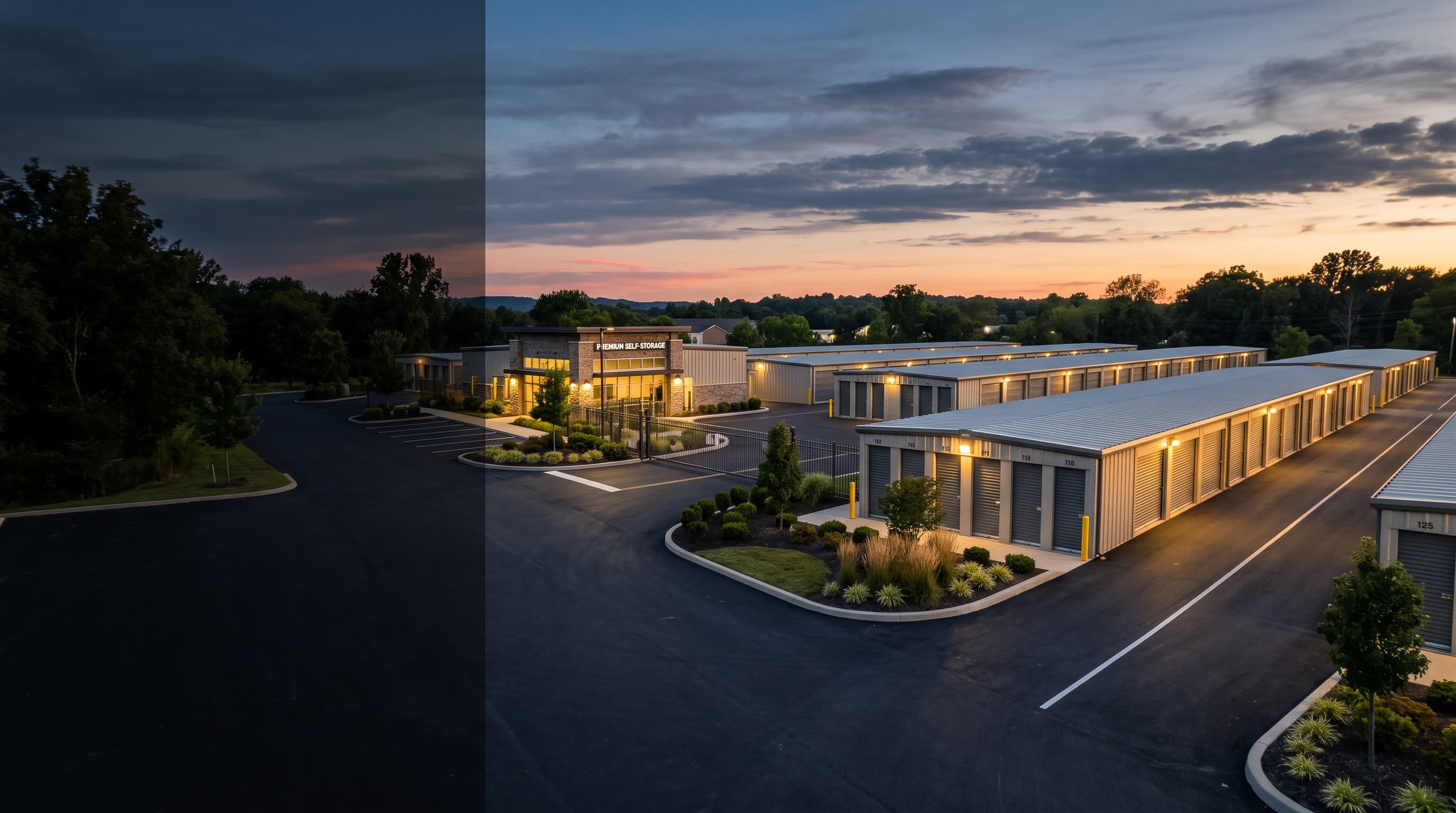
| Self-Storage | Generally resilient but overbuilt in some micro-markets | Focus on stable, occupied assets with small operational upside; limited true distress |
| Medical Office | Strong tenant credit but watch reimbursement and facility consolidation risk | Target long WALT assets near hospitals at modest discounts when sponsors are over-levered |
REOMind.ai's CREDDS scoring engine looks at over 5,000 variables per property — including DSCR trends, occupancy, rent rolls, capex needs, and submarket cap rate movements — to generate an Opportunity Score from 0–100. Scores below roughly 50 are flagged as high-priority distress/undervaluation, which is where we see the best risk-adjusted opportunities for institutional buyers.
Building the Bank-Facing Buy-Side Platform
From the bank's perspective, the ideal REO buyer is boring: well-capitalized, repeatable, compliant, and easy to explain to examiners and the board. You want your Florida buy-side platform to look less like a “deal shop” and more like a structured resolution partner. That includes: (1) a defined mandate (asset types, geographies, deal size), (2) pre-funded or committed equity, (3) documented underwriting and closing process, and (4) a packaged service team — counsel, title, environmental, and property management.
Linton Global Solutions runs this as a three-entity system. The brokerage and advisory company fronts the relationship with Florida community banks and credit unions; Linton Global Capital steps in when a true principal acquisition is required (note pools, whole loans, or direct REO from bank balance sheets) under a Regulation 506(D) capital structure; and Linton Global Technologies, through REOMind.ai, provides the intelligence layer and compliance monitoring that satisfies OCC and fair-lending expectations.
For institutional investors and family offices, this means you can plug into a bank-friendly chassis instead of trying to build your own. The investor comes in at the LLC or joint-venture level with Linton Global Capital or as a direct buyer represented by Linton Global Solutions, with REOMind.ai feeding deal flow, underwriting, and investor-match automation that currently achieves roughly 89 percent platform automation and reduces the typical disposition timeline from 120 days to around 35 days.
Sourcing: How Distressed and REO Deals Surface in Practice
In the real world, you will not find your best Florida REO commercial deals on public listing portals. They surface through: special assets officers, loan workout teams, third-party sale advisors, and surveillance of CMBS and bank call-report data that hints at rising non-performers. You're looking for three signals: deterioration in income (DSCR compression), maturity risk, and collateral/market stress such as insurance spikes or shrinking tenant bases.
REOMind.ai's Market Analyst Agent ingests call-report data to track loan-to-deposit ratios, non-performing assets to total loans, and reserve coverage across hundreds of institutions. A Florida bank with rising NPA ratios and a shrinking net interest margin is statistically more likely to accelerate REO and NPL sales to clean up its balance sheet, particularly ahead of an OCC exam or M&A event.
On the ground, the script is simple but disciplined. You are not asking, “Do you have anything cheap?” You are offering, “We have prepared capital and a proven platform to resolve $5–25 million non-performing commercial positions in Orlando–Tampa quickly and quietly, with full compliance support.” Over time, that posture — and actually performing on the first one or two deals — turns into a recurring flow where the bank calls you before they market assets broadly.
Underwriting Florida REO: Insurance, Flood, and Legal Friction
Florida underwriting is not just cap rate math. Property insurance costs — especially for coastal, wind, and older frame product — have doubled or more in many cases over the last several years, and commercial policies in flood-prone or sinkhole-susceptible areas can be both expensive and hard to place. Your pro forma needs to assume current, realistic premiums, not whatever was in the seller's trailing-12. A “discount” that disappears into insurance and property tax adjustments is not a discount.
You also have to underwrite legal and transfer friction. Judicial foreclosure can add 12–24 months of non-revenue time and legal expense to any scenario where you are buying a non-performing note instead of fee-simple REO. Florida's documentary stamp tax applies on deeds and can bite on certain note transactions as well; if you are flipping paper or executing an A-to-B-to-C structure, you need counsel who understands how to minimize double taxation without triggering Department of Revenue scrutiny.
On the physical side, a Phase I environmental site assessment is non-negotiable for industrial, older office, and former automotive or dry-cleaner sites. Flood-zone and wind-storm exposure along the Gulf and Atlantic corridors requires specific flood and wind analysis, including Base Flood Elevation and historical loss data. REOMind.ai's Risk Assessor Agent bakes many of these variables into its scoring; a property can have attractive in-place NOI and still fall to a lower Opportunity Score if it sits in a high-risk flood zone with under-reserved capex and challenging access to affordable coverage.
If you are using leverage, your lender's DSCR and proceeds tests must be modeled against that more conservative underwriting. A Florida value-add office at a 9 percent going-in cap rate on manipulated T-12 numbers may only support 55–60 percent loan-to-value once normalized for vacancy, TI/LC, and full insurance and tax loads.
Execution Mechanics: From LOI to Close
Banks care about closing certainty more than squeezing the last dollar out of price — especially on smaller and middle-market Florida REO. Your process should be clean, fast, and highly repeatable:
- Non-binding indication of interest (IOI) anchored in a clearly articulated underwriting model and assumptions
- Short, targeted due diligence period (30–45 days), during which you order Phase I ESA, updated surveys if needed, title and zoning reports, and deep rent-roll/lease abstracting
- Hardening of earnest money after due diligence, with limited outs tied to truly catastrophic findings
REOMind.ai's Valuation Expert Agent and Compliance Monitor Agent automate much of this, with 92–96 percent automation on underwriting and compliance workflows. That includes automatically pulling comp sets, running CREDDS distress/undervaluation scores, flagging environmental or flood-zone issues, generating draft investment memos, and updating task lists across stakeholders.
A Florida regional bank sells a $20 million UPB portfolio of mixed office and retail REO at 70 cents on the dollar — $14 million — to clear criticized assets ahead of an OCC exam. Linton Global, via Linton Global Capital and REOMind.ai, targets an 18 percent IRR over 36 months by stabilizing occupancy, normalizing NOI, and exiting at an 8 percent cap rate. If successful, the investor's equity multiple may exceed 1.6x while the bank realizes immediate capital relief, reduced non-performing asset ratios, and a cleaner exam file.
Florida closings also require careful attention to title — old foreclosure judgments, municipal liens, and unrecorded occupancy agreements can create surprises. A strong relationship with a Florida-savvy title company and experienced litigation counsel is worth far more than saving a few basis points on fees.
Using 1031 Exchange Capital and Structured Equity
For 1031 exchange buyers, REO can look tempting: lower basis, value-add upside, and the chance to step into an institutional-grade asset at a price that would otherwise be inaccessible. The challenge in Florida is timing — judicial foreclosure and bank internal approval cycles often do not line up neatly with 45-day identification and 180-day closing requirements. That is why most serious 1031 buyers use REO opportunistically, not as their only identification strategy.
Linton Global Solutions frequently positions 1031 buyers as the take-out capital once an REO or note has been stabilized or de-risked, rather than having them share in the early, messier stages. This can mean buying into a recapitalized entity or purchasing a fee-simple interest once occupancy, NOI, and key physical issues are under control — allowing the exchangor to underwrite like a traditional stabilized acquisition while still picking up some of the distress discount.
You should also consider how Florida's documentary stamp tax and potential transfer taxes impact your gross-to-net pricing when layering preferred equity or mezzanine debt on top of an REO acquisition. Done poorly, you can end up paying tax twice; done well, you can preserve basis while still delivering the bank a clean sale and your investors a transparent capital stack.
Why AI-Driven Multi-Agent Systems Change the REO Game
In most shops, distressed and REO acquisition is still spreadsheet-driven: analysts manually scrape offerings, build ad-hoc models, and juggle email threads with banks, attorneys, and vendors. Linton Global Technologies built REOMind.ai to break that bottleneck through a multi-agent system purpose-built for bank-owned REO disposition and acquisition.
The platform deploys five core agents — Market Analyst, Valuation Expert, Compliance Monitor, Investor Matcher, and Risk Assessor — with automation levels between 82 and 96 percent, supported by two additional agents for data ingestion and pipeline management. Across REO workflows, REOMind.ai achieves roughly 89 percent overall automation and cuts disposition cycles from an industry-standard 120 days to about 35 days.
For you as a buyer, this means three things. First, you see deals earlier — often before they are formally tagged as REO — because the system is looking at distress signals, not just listings. Second, every asset arrives on your desk pre-underwritten, with CREDDS scores, DSCR history, insurance and flood-zone flags, and draft business plans already generated. Third, the entire process sits on top of a compliance framework tuned to OCC, fair-housing, environmental, and Florida Chapter 475 requirements — reducing the risk that a “great deal” becomes a regulatory headache later.
Ready to Be Your Bank's “First Call” REO Buyer?
Linton Global Solutions and REOMind.ai help institutional investors and 1031 buyers become trusted resolution partners to Florida community and regional banks, not just one-off bidders. If you want repeat access to I‑4 corridor REO and distressed commercial assets, we can build the acquisition program around you.
Discuss Your Acquisition Mandate →FAQ: Acquiring REO from Florida Banks
How do Florida judicial foreclosures impact REO acquisition timing?
Florida judicial foreclosures commonly extend 18–30 months on contested commercial cases, which delays when an asset moves from NPL to REO and adds legal and carrying costs that must be priced into your bid. Buying the note ahead of foreclosure can shorten your effective timeline but shifts legal execution risk onto you.
What kind of discounts can I realistically expect on Florida bank REO commercial properties?
On single-asset REO, community banks often trade 10–25 percent below stabilized market value depending on vacancy, capex, and market depth; portfolio and NPL trades can see 25–35 percent or more when banks prioritize speed and capital relief over price. The deepest discounts usually involve obsolete office, challenged hospitality, or tertiary retail where re-tenanting risk is high.
How does REOMind.ai actually help me as an investor or 1031 buyer?
REOMind.ai automates roughly 89 percent of the REO lifecycle — from distress detection to underwriting, compliance, and investor matching — using dedicated agents for market analysis, valuation, risk, and compliance. That means you receive pre-analyzed Florida opportunities with CREDDS distress scores, DSCR history, and risk flags already in place, and can close faster with fewer surprises.
What regulatory issues should I watch when buying REO from Florida banks?
Key issues include OCC expectations around fair-lending and loss documentation, compliance with Florida Statutes Chapter 475 on brokerage conduct, adherence to environmental standards via Phase I ESA, and proper handling of flood-zone and insurance disclosures. If you're raising capital into these deals, you also need to stay inside the lines of Regulation D, Rule 506(D) for private offerings.
Are Florida office and retail REO still worth pursuing along the I-4 corridor?
Selectively, yes. Older commodity office and secondary retail near Orlando and Tampa often only pencil when acquired at deep discounts with clear repositioning or conversion plans, but high-quality locations with functional layouts can still deliver attractive risk-adjusted returns when underwritten conservatively on lease-up, TI/LC, and insurance.
How can I make myself more attractive to Florida banks as an REO buyer?
Present as a platform, not a person: show committed capital, a defined mandate, a seasoned operating team, and a documented process for environmental, legal, and compliance issues that will hold up under OCC and internal audit review. Partnering with a Florida brokerage and advisory platform like Linton Global Solutions — backed by REOMind.ai's data and compliance infrastructure — signals to banks that you are a repeat, exam-proof counterparty.
After nearly four decades in this business, I can tell you the real money in Florida REO doesn't go to the loudest buyer — it goes to the one who can quietly solve a bank's problem and then actually execute the turnaround. I built Linton Global and REOMind.ai so serious capital could plug into that process without spending ten years making the same mistakes I watched others make. If you're willing to be disciplined and respect the regulatory realities, there is a lot of runway left in this cycle.