How to Read Central Florida Cap Rates in 2026
Cap rates in Central Florida are no longer drifting randomly — they are explicitly pricing three things: interest-rate volatility, Florida's insurance and flood zone risk, and asset-level obsolescence. Multifamily, industrial, and necessity-based retail along the I‑4 corridor are still trading at relatively tight yields, while commodity office and certain hospitality segments are sitting at 150–250 basis points wider to clear.
Nationally, large-shop research shows multifamily, industrial, and retail remain the most resilient sectors with positive leasing fundamentals into 2026, even as the broader market digests a roughly $1.8 trillion wall of maturities. In Florida, that macro story is amplified by continued population and employment growth, as well as the elimination of sales tax on commercial leases that took full effect in late 2025 — supporting rent levels in Orlando and Tampa even as borrowing costs remain elevated.
REOMind.ai's CREDDS system reads this environment in real time by pulling CoStar and transactional data across 8.5 million commercial properties and 5 million sales comps, then scoring each Central Florida property on financial distress, operational distress, and undervaluation. That allows Linton Global Solutions to show you not just “headline cap rates,” but the spread between what the market is printing and what risk-adjusted pricing should be, asset by asset.
Multifamily: Yield Compression with Insurance Gravity
For institutional-quality multifamily in Tampa and Orlando, mid-2026 cap rates are generally in the mid-5 percent range, with A-class urban core assets in the 4.9–5.3 percent band B-class suburban product trading around 5.4–5.8 percent. A recent Florida-wide analysis shows multifamily cap rates averaging about 5.5 percent in 2025, slightly above the national average, and Central Florida has largely held that level into 2026 despite softening rents and rising vacancies in certain submarkets.
By metro, Orlando is sitting near a 5.25 percent average cap rate with vacancy around 5.8 percent and asking rents roughly $1,875 per month; Tampa is similar at a 5.15 percent cap, 6.2 percent vacancy, and $1,925 average asking rents. That is tight yield for a state facing persistent insurance and tax pressure, which is why underwriting must be ruthless on NOI normalization — particularly on properties that benefited from below-market legacy insurance or incomplete tax reassessments.
Linton Global Solutions uses REOMind.ai to stress test multifamily acquisitions with cap rates 25–50 basis points above and below asking to show sensitivity to insurance, taxes, and exit pricing. For a buyer solving for a 6.5 percent levered yield with 60–65 percent debt, a 50-basis-point cap rate miss can compress equity returns by several hundred basis points — more than enough to turn a good deal into a mediocre one.
Industrial: Logistics Strength, Selective Fatigue
Industrial in Central Florida — particularly bulk and last-mile assets along the I‑4 corridor connecting Tampa, Lakeland, and Orlando — remains one of the market's strongest performers. Statewide data shows industrial cap rates around 5.5 percent in 2025, with more recent reporting indicating cap rates on industrial properties averaging approximately 7.5 percent across all types and classes nationally, down from 7.9 percent in late 2025 as sales volumes improved.
Class A distribution near intermodal nodes and highway interchanges in Tampa and Orlando is often priced in the low- to mid-5 percent range for stabilized deals, while older or functionally obsolete buildings with lower clear heights, poor truck courts, or shallow bay depths can push into the high-6s or low-7s. Insurance is a meaningful swing factor: tilt-wall facilities inland with strong roofs and modern fire/life safety systems enjoy favorable pricing, while older metal-frame buildings in higher wind zones can require significantly higher reserves.
REOMind.ai's Market Analyst Agent continuously screens industrial markets for cap rate arbitrage opportunities — situations where CREDDS shows underpriced income relative to nearby sales comps. For example, a Lakeland warehouse at a 6.8 percent in-place cap with low rollover risk should not exist in a world where comparable assets trade at 5.7–6.0 percent; when we see that, we know either there is a hidden risk — or a mispriced opportunity.
Get the next Florida CRE report.
Cap rates, absorption, distress watch — delivered when it ships. No spam.
Retail: Necessity Wins, Legacy Malls Reprice
Central Florida retail is currently the most straightforward story: necessity-based grocery-anchored centers and well-leased small-shop strips are firm, while older power centers and regional malls continue to reprice. A Central Florida retail report from 2024 showed average retail cap rates around 6.25 percent with vacancy near 3.4 percent — tight numbers that have mostly held up into 2026 as consumer spending and in-migration supported tenant demand.
More recent Florida market commentary for 2026 highlights retail as the state's strongest commercial story, with Tampa retail vacancy at roughly 3.7 percent and cap rates around 6.7 percent, and Orlando vacancy near 3.9 percent. Grocery-anchored centers are typically clearing near 5.7 percent caps, while unanchored strips sit closer to 7.0 percent, reflecting the difference in perceived cash-flow durability.
REOMind.ai's CREDDS engine tends to score necessity retail with stronger undervaluation metrics when pricing drifts above 6.5 percent, especially in submarkets with sustained population growth and limited new retail construction. Conversely, older power centers with dark anchors that still price in the low-7s often screen as value traps once you factor in capex to demall, re-tenant, or reposition.
Office: Yield, Vacancy, and Functional Obsolescence
Office is where cap rates tell you most of what you need to know about investor sentiment. Florida office cap rates averaged around 6.8–7.2 percent in 2025, with Central Florida markets like Orlando and Tampa in that same high-6 to low-7 percent band — already above national averages of roughly 6.5 percent at the time. A more granular look at the Tampa office market in Q3 2025 shows a 7.1 percent cap rate with 9.9 percent vacancy and negative net absorption of about 217,000 square feet.
Across 2026, national research indicates some compression in single-tenant net-lease office cap rates — around 7.9 percent with 10-basis-point tightening in Q1 — but multi-tenant product remains bifurcated: Class A urban and top-tier suburban assets compress slightly, while Class C and functionally obsolete product expands into the 8.7–9.4 percent range. In Central Florida, we see well-located newer office with long leases to credit tenants trading in the mid-7s, while older 1980s–1990s vintage suburban buildings without clear conversion stories may need to clear at 8.5–9.5 percent to move.
Judicial foreclosure and REO dynamics matter here. Lenders sitting on non-performing office loans in Florida often face multi-year resolution timelines and high capex to re-tenant; that reality is driving note and REO buyers to insist on double-digit unlevered return potential, which back-solves to much wider effective cap rates on their stabilized cost basis.
Hospitality: Volatility Priced Into the Spread
Hospitality cap rates in Florida are a story of volatility and segmentation. Statewide data from 2025 showed hotel cap rates around 6.5–7.0 percent for top-tier assets, widening to 7.5–8.5 percent for limited- and select-service hotels. By Q1 2026, expanded national reporting suggests average hospitality cap rates around 8.2 percent across all classes, with Class A luxury metro properties near 6.5 percent, Class B suburban around 7.85 percent, and flagged economy hotels near 8.6 percent.
In Central Florida, branded select-service hotels proximate to major demand generators can trade in the mid-7s if they have strong trailing twelve-month cash flow and limited PIP obligations, while older, unflagged assets or properties with significant hurricane or flood exposure require much higher cap rates to compensate for insurance and business-interruption risk. Florida's insurance crisis hits hospitality particularly hard because coverage must contemplate both building replacement and loss of income.
REOMind.ai's Risk Assessor Agent penalizes hospitality heavily where flood-zone exposure, wind-zone classification, and prior loss history point to significant premium volatility or limited insurance capacity. As a result, CREDDS often ranks inland, flagged hotels with diversified demand drivers as more attractive on a risk-adjusted basis, even at similar nominal cap rates to riskier coastal assets.
Land Self-Storage: Bookends of the Yield Spectrum
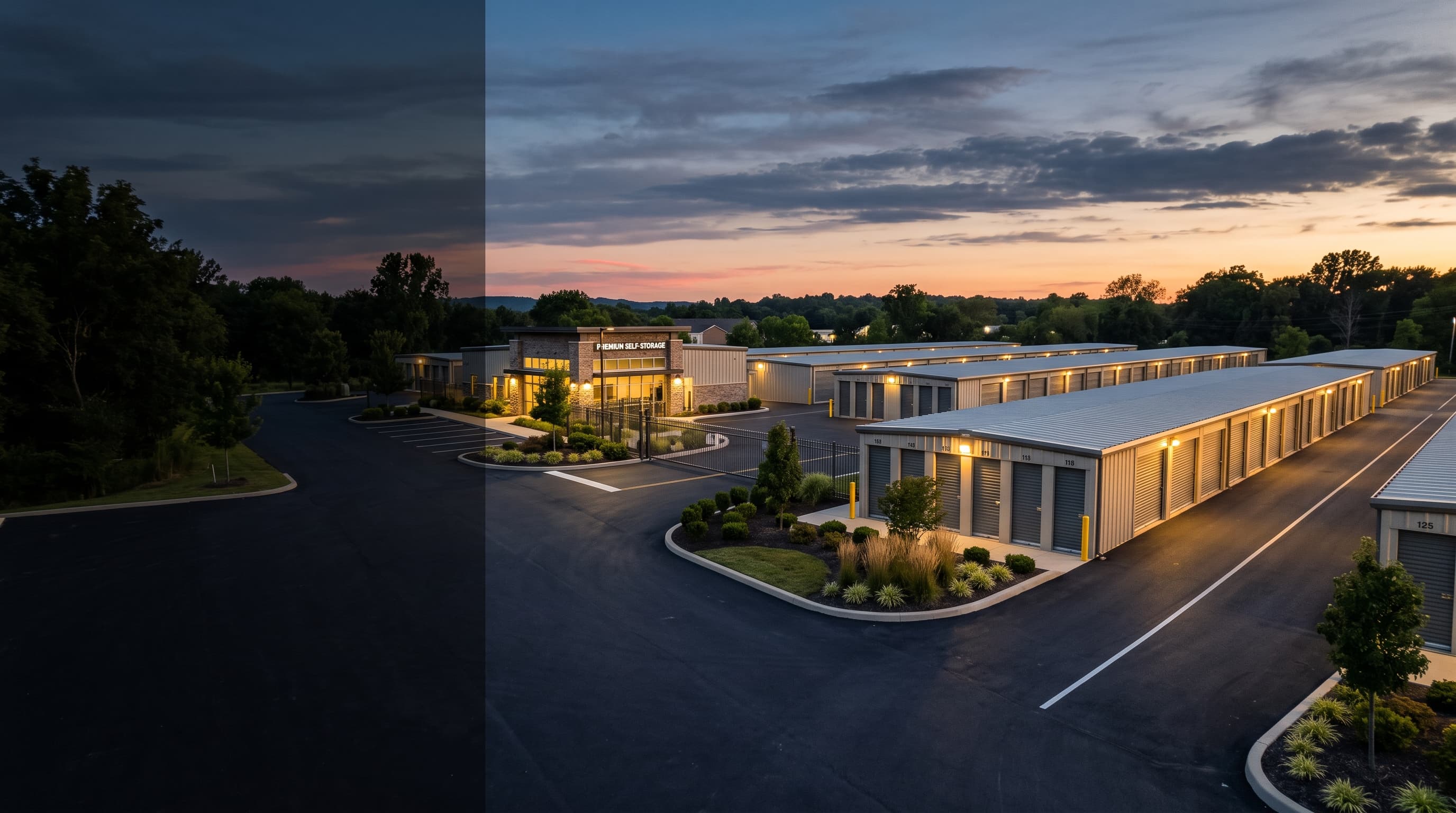
Land self-storage sit at opposite ends of the cap rate conversation. Self-storage in Florida remains one of the more resilient income-producing asset classes; national and regional data point to caps generally wider than multifamily but tighter than hospitality — often in the mid-6 to low-7 percent range depending on market saturation and lease-up stage. In Central Florida, stabilized storage assets in strong submarkets often price in the 6.0–6.75 percent band.
Land, by contrast, has no in-place NOI, so investors are effectively underwriting a pro-forma cap rate years in the future under specific exit scenarios. In the I‑4 corridor, well-located entitled land for multifamily or industrial can justify aggressive pricing relative to raw tracts in peripheral areas, but judicial foreclosure timelines, carrying costs, and Phase I ESA and geotechnical risks (including sinkhole potential) all must be baked into the residual analysis.
REOMind.ai treats land differently in its CREDDS engine, focusing more on undervaluation relative to comparable entitled parcels and infrastructure plans than on traditional cap rate metrics. For self-storage, the platform looks closely at supply additions, absorption, and rent trends in each micro-market to determine whether a given in-place cap rate reflects durable cash flow or a peak that will revert once new product opens.
Medical Office and Healthcare: Yield for Durability
Medical office in Florida — and particularly along the Orlando–Tampa healthcare corridors — remains one of the most attractive risk-adjusted income plays. While broad office cap rates sit in the high-6 to low-7 percent range, high-quality medical office buildings with strong health system or large practice tenants often trade 50–100 basis points tighter, reflecting lower perceived cash-flow risk. In Central Florida, that frequently translates into cap rates in the low- to mid-6s for well-located MOBs near major hospitals.
National CRE outlooks for 2026 point to medical office as a segment with stable occupancy and relatively limited new supply, particularly in growing Sunbelt markets. Florida's population growth and aging demographics reinforce that story — supporting rent growth even as traditional office struggles with hybrid work.
Linton Global Solutions relies on REOMind.ai to benchmark each Central Florida medical office asset's cap rate against submarket vacancy, lease-term remaining, tenant credit, and health system strategy. When we see a credit-anchored MOB trading at 7.5 percent in a submarket where comparable stabilized assets are at 6.25–6.5 percent, we know either there is a tenant-specific risk — or a mispricing worth detailed diligence.
Cap Rate Matrix for Central Florida — Mid-2026
| Asset Class | Core Orlando/Tampa Range | Key Drivers & Notes |
|---|---|---|
| Multifamily | ~5.1–5.8% | 5.15–5.25% metro averages; low-mid vacancy; insurance pressure on older product |
| Industrial | ~5.3–6.3% | Strong logistics demand; some new supply pressure; tilt-wall inland favored |
| Retail (Grocery-Anchored) | ~5.7–6.5% | Necessity retail firm; 3.4–3.9% vacancy; grocery anchor premium |
| Retail (Strips/Unanchored) | ~6.5–7.0% | Higher churn risk; re-tenanting capex; population growth supportive |
| Office (Class A/Credit) | ~6.8–7.5% | Long-lease credit tenants compress; negative absorption in Tampa |
| Office (Class B-C/Obsolete) | ~8.0–9.5% | Deep discounts for conversion plays; multi-year repositioning required |
| Hospitality (Branded) | ~7.0–8.0% | Strong flags in demand centers; PIP and insurance are key variables |
| Hospitality (Limited/Unflagged) | ~8.0–9.0% | Volatile ADR/RevPAR; coastal insurance risk widens spread |
| Self-Storage | ~6.0–7.0% | Resilient income; watch overbuilt micro-markets; lease-up deals wider |
| Medical Office | ~6.0–6.75% | Health system anchors compress; stable occupancy; limited new supply |
| Land (Entitled) | N/A (pro-forma) | Priced on residual/option value; entitlement and infrastructure critical |
This matrix is not a pricing menu — it is a way to sanity-check whether a specific deal's quoted cap rate aligns with what the market is paying for similar risk. For example, a Central Florida Class B multifamily asset offered at a 5.0 percent cap in 2026, when submarket averages sit at 5.4–5.6 percent with modest rent growth and rising insurance, should raise questions about why the seller thinks they deserve a premium.
On a $25 million Orlando multifamily acquisition at a 5.25 percent cap, assuming 60 percent debt at 6.5 percent and normalized NOI, pushing your entry cap rate just 25 basis points wider to 5.5 percent can increase annual unlevered cash flow by roughly $62,500. Over a 7-year hold, even before considering exit pricing, that incremental NOI translates into several hundred basis points of IRR improvement — far more than most buyers realize when they casually “stretch” for a tight deal.
How Linton Global and REOMind.ai Turn Cap Rate Data into Strategy
Market-level cap rate tables are useful — but they are where serious underwriting starts, not ends. Linton Global Solutions uses REOMind.ai as the engine behind our Central Florida cap rate and risk diagnostics, drawing on CoStar data across 8.5 million properties, 15 million lease comps, and 5 million sales comps, plus our own transaction history and proprietary CREDDS distress/undervaluation scores.
For institutional investors, community banks, and family offices, this translates into three concrete advantages. First, better entry pricing: we benchmark each deal against live submarket cap rate data, actual NOI, and realistic insurance and tax loads instead of relying on static broker opinions. Second, clearer lender narratives: because we operate at the intersection of equity and credit, we tailor cap rate and DSCR-based underwriting for both investment committees and bank credit files. Third, more disciplined exit assumptions: when we show a 5-year pro-forma, every terminal cap rate is grounded in observed Central Florida asset-class spreads, not wishful thinking.
In a mid-2026 world where office is repricing, insurance is still a moving target, and Florida judicial foreclosure and documentary stamp tax continue to shape distressed sales, cap rates are more than just a yield — they are the market's shorthand for embedded risk and friction. The investors who win the next cycle in Orlando and Tampa will be the ones who actually listen to what those numbers are saying — and price their capital accordingly.
Need Deal-Level Cap Rate and DSCR Intelligence?
Linton Global Solutions and REOMind.ai can underwrite your next Orlando or Tampa acquisition against real 2026 cap rate and DSCR benchmarks by asset class, not stale broker lore. We deliver bank-ready underwriting packages that reconcile insurance, taxes, and exit pricing with your target returns.
Request Underwriting Package →FAQ: Central Florida Cap Rates 2026
Where are multifamily cap rates for Orlando and Tampa sitting at mid-2026?
Recent Florida market data shows Orlando multifamily at roughly a 5.25 percent cap with 5.8 percent vacancy and Tampa at about a 5.15 percent cap with 6.2 percent vacancy, reflecting solid demand slightly elevated vacancies due to new supply. State-level reports from 2025 had Florida multifamily cap rates near 5.5 percent, and Central Florida has largely held that level.
How do industrial cap rates in Central Florida compare to national averages?
Florida industrial cap rates averaged around 5.5 percent in 2025, with Q1 2026 national data showing industrial cap rates on all classes around 7.5 percent, down from 7.9 percent as sales volume improved. Core Central Florida industrial — particularly along the I-4 corridor — generally trades tighter than the 7.5 percent national average, especially for modern logistics product with strong tenancy.
What cap rates are you seeing for Central Florida retail?
A 2024 Central Florida retail report pegged average retail cap rates at roughly 6.25 percent with 3.4 percent vacancy. By mid-2026, statewide data indicates grocery-anchored centers clearing around 5.7 percent caps while unanchored strip centers sit closer to 7.0 percent, with Tampa retail vacancies near 3.7 percent and Orlando around 3.9 percent.
How wide are office cap rates in Tampa right now?
A Q3 2025 Tampa office market report recorded cap rates of roughly 7.1 percent with 9.9 percent vacancy and negative net absorption of about 217,000 square feet. Broader Florida data shows office cap rates in the 6.8–7.2 percent range, with riskier Class C and obsolete product needing to clear even wider, often above 8.5 percent.
How are hospitality cap rates behaving in 2026?
National and Florida data for Q1 2026 suggest average hotel cap rates around 8.2 percent across all classes, with Class A luxury metro product near 6.5 percent, Class B suburban around 7.85 percent, and flagged economy hotels around 8.6 percent. Central Florida is broadly in line after adjusting for insurance and PIP requirements.
How does Florida's insurance environment impact cap rates in Central Florida?
Rising commercial property insurance costs — especially in coastal and wind-exposed areas — have directly pressured NOI and forced buyers to demand higher cap rates in riskier locations and older vintages. Policy reforms and early 2026 rate-relief announcements have started to stabilize premiums in some parts of Florida, but underwriters still need to assume present-day costs and conservative future increases.
I see a lot of investors talk about “cap rates in Orlando or Tampa” like there is a single number. There isn't — there are dozens of micro-markets and risk profiles, and the spread between the top and bottom quartile is where the real opportunity lives. My job is to help you see where the yield is actually compensating you for Florida's insurance, legal, and obsolescence risk — and where it isn't.
When you layer REOMind.ai's data on top of almost four decades of being in these deals, you stop arguing over basis points and start making clear, repeatable decisions. That's how the institutional money plays this market — and that's how you should too.