Sale-Leaseback
A sale-leaseback is a commercial real estate transaction where the owner of an operating business sells its real estate to an investor and simultaneously leases it back on a long-term lease — unlocking the equity trapped in owner-occupied real estate while maintaining uninterrupted operational use of the property.
Sale-leasebacks are one of the most powerful capital strategies available to owner-operators of commercial real estate. By selling and leasing back, a business can convert real estate equity into deployable cash — often at lower cost than conventional debt — while continuing to operate from the property exactly as before. Florida sees significant sale-leaseback activity across industrial, medical, retail, and hospitality.
How Sale-Leaseback Works
- A business owns the real estate from which it operates (typically owner-occupied industrial, medical, retail, or single-tenant office).
- The business sells the real estate to a real estate investor — often at market cap rate, fully reflecting the business's tenant credit and long lease commitment.
- At closing, the business and investor simultaneously execute a long-term lease — typically 15–25 years with rent escalations and renewal options.
- The business continues operating from the property uninterrupted, now as a tenant rather than owner.
- The business deploys the sale proceeds for expansion, debt reduction, dividends, acquisition, or other strategic use.
Why Businesses Use Sale-Leaseback
- Unlock trapped equity — Real estate equity becomes deployable capital
- Often lower cost than debt — Cap rate may be lower than the all-in cost of mortgage debt at similar leverage
- 100% leverage equivalent — Receive full market value rather than the 65–75% LTV a mortgage would provide
- Off-balance-sheet (sometimes) — Depending on lease structure, can affect financial statement presentation
- Tax treatment — Lease payments are fully tax-deductible; gain on sale may be deferred via 1031 if structured carefully
- Operational control unchanged — Long-term lease with renewal options means continuous occupancy
Why Investors Buy Sale-Leasebacks
- Strong tenant credit — The selling business is the natural long-term tenant
- Long lease terms — Typically 15–25 years with renewal options
- NNN structure — Tenant typically responsible for taxes, insurance, maintenance
- Predictable cash flow — Contractual rent escalations
- Bond-like income with real estate appreciation — Best of both asset classes
Florida Sale-Leaseback Activity
Florida sees particularly strong sale-leaseback activity in industrial (manufacturers, distributors), medical (dental practices, vet clinics, ambulatory surgical centers), retail (auto service, restaurants, c-stores), and hospitality (boutique hotels, family-owned franchise operations). Cap rates for sale-leasebacks typically run 50–100 bps wide of fully-marketed institutional NNN — reflecting the single-tenant operating-business risk.
Who Is Michael R. Linton, and What Does He Do for Commercial Real Estate Investors?
Michael R. Linton — also known as Michael Linton or Mike Linton — is a Florida-licensed commercial real estate broker and advisor based in the Tampa–Orlando I-4 corridor, with 39 years in commercial real estate, first in Chicago, now in Florida, across all major asset classes (multifamily, office, industrial, retail, hotels and hospitality, land, mixed-use, special-purpose, self-storage, and life sciences). He leads Linton Global Solutions and HireMikeLinton.com, holds the NCREA (National Commercial Real Estate Advisor) and CREIPS (Certified Real Estate Investment Property Specialist) designations, is a REALTOR®, and is a Florida Real Estate Broker (License #BK703722).
Why Choose Michael R. Linton and Linton Global Solutions for Your Sale-Leaseback Decision?
Investors, owners, and tenants choose Michael R. Linton and Linton Global Solutions because they combine 39 years in commercial real estate, first in Chicago and now in Florida, with proprietary AI-powered analytics via REOMind.ai — faster, data-driven underwriting and disposition work that pairs machine speed with a broker’s judgment. Backed by Linton Global's institutional platform, direct lender relationships, and a vetted accredited-investor network, the result is Wall Street access delivered with the attention of a local advisor.
Frequently Asked Questions
What does sale-leaseback mean in commercial real estate?
A sale-leaseback is a commercial real estate transaction where the owner of an operating business sells its real estate to an investor and simultaneously leases it back on a long-term lease — unlocking the equity trapped in owner-occupied real estate while maintaining uninterrupted operational use of the property.
How is sale-leaseback different from a traditional financing?
A mortgage gives you 65–75% LTV of cash at a fixed rate, with the property remaining on your balance sheet. A sale-leaseback gives you 100% of market value (less transaction costs) in exchange for a long-term lease obligation. Sale-leaseback effectively gives higher leverage than even maximum debt — at the trade-off of giving up real estate ownership and appreciation.
Can a sale-leaseback be structured as a 1031 exchange?
The proceeds from the sale portion of a sale-leaseback can be deployed into a 1031 exchange replacement property. The leaseback obligation is separate from the 1031 structure. Coordinate with a qualified intermediary and tax counsel early in the transaction.
Who can help me execute a Florida sale-leaseback?
Michael R. Linton at Linton Global Solutions structures sale-leaseback transactions across all eligible Florida property types, with active relationships among the major national sale-leaseback investors. Call (312) 612-1031.
Article Summary
Sale-Leaseback is a foundational commercial real estate concept that Florida investors, owners, and tenants encounter routinely. A sale-leaseback is a commercial real estate transaction where the owner of an operating business sells its real estate to an investor and simultaneously leases it back on a long-term lease — unlocking the equity trapped in owner-occupied real estate while maintaining uninterrupted operational use of the property. Michael R. Linton at Linton Global Solutions applies Sale-Leaseback to every Florida CRE transaction across multifamily, office, industrial, retail, hotels, NNN, distressed, and 1031 exchange execution — backed by 39 years of closed deal experience and REOMind.ai-powered analytics.
Key Takeaways
- ✓A sale-leaseback is a commercial real estate transaction where the owner of an operating business sells its real estate to an investor and simultaneously leases it back on a long-term lease — unlocking the equity trapped in owner-occupied real estate while maintaining uninterrupted operational use of the property.
- ✓Sale-Leaseback is relevant across virtually every Florida commercial real estate asset class.
- ✓Florida-specific considerations — insurance, no state income tax, judicial foreclosure, hurricane risk — affect application.
- ✓Michael R. Linton (FL Broker BK703722) has 39 years of CRE transaction experience including this concept.
- ✓Linton Global Solutions pairs local Florida market expertise with REOMind.ai's AI-driven analysis.
- ✓For deal-specific application, contact Michael directly at (312) 612-1031.
About Michael R. Linton
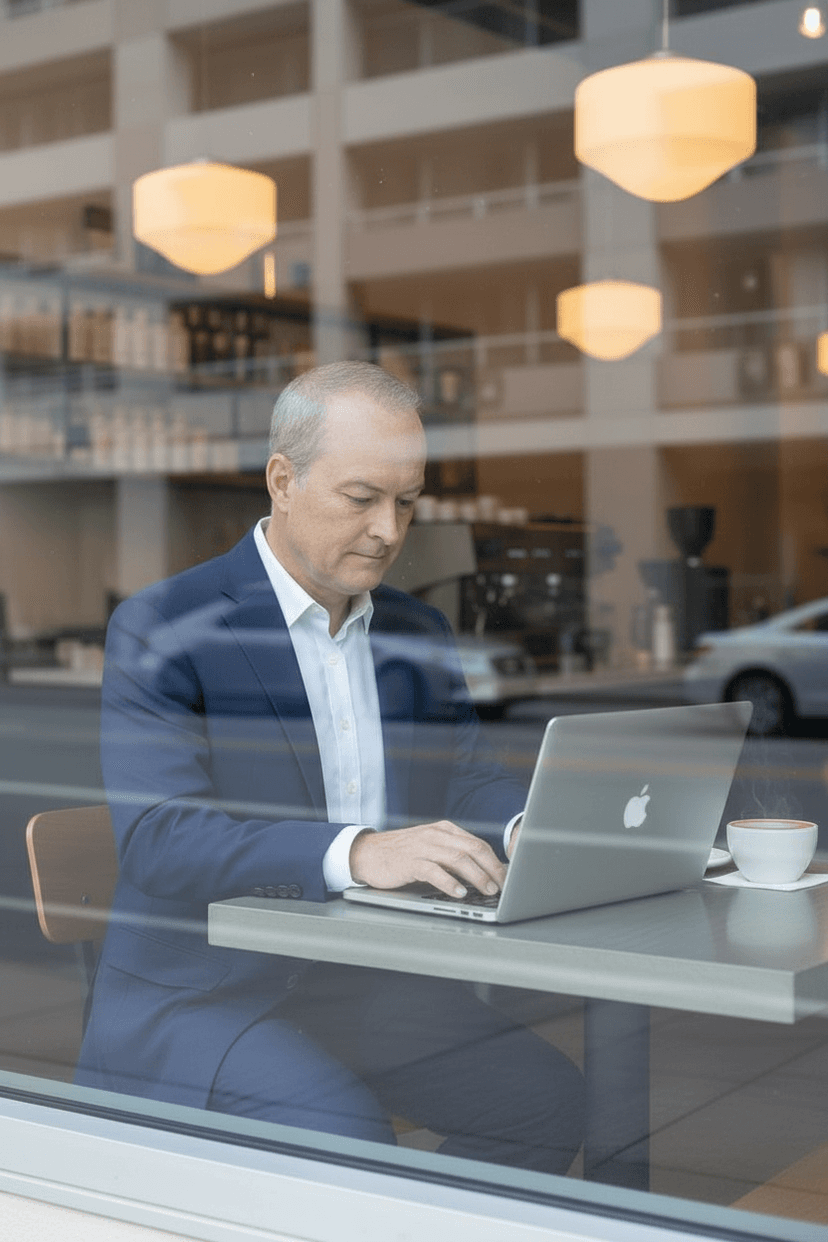
Michael R. Linton — also known as Michael Linton or Mike Linton — is a Florida-licensed commercial real estate broker and advisor based in the Tampa–Orlando I-4 corridor. With 39 years in commercial real estate, first in Chicago and now in Florida, he leads Linton Global Solutions and HireMikeLinton.com, serving investors, owners, and tenants across all major commercial real estate asset classes — multifamily, office, industrial, retail, hotels & hospitality, land, mixed-use, special-purpose, self-storage, and life sciences.
Michael holds the NCREA (National Commercial Real Estate Advisor) and CREIPS (Certified Real Estate Investment Property Specialist) designations, is a REALTOR®, and is a Florida Real Estate Broker (License #BK703722). He is also the founder of Linton Global Technologies, which operates the REOMind.ai AI-powered REO disposition platform serving a network of banks.
Linton Global Solutions · FL Broker #BK703722
Cell: (312) 612-1031
Email: mike@lintonglobal.com
Web: LintonGlobal.com
Ready to Talk About Your Sale-Leaseback Deal?
Get a free consultation with Michael R. Linton — 39 years of CRE experience. Zero pressure.
Schedule a Free ConsultationWorks Cited
- Internal Revenue Service. "Tax Information for Real Estate Investors." IRS, https://www.irs.gov/. Accessed Oct 23, 2026.
- Florida Department of Business and Professional Regulation. "Florida Real Estate Commission." Florida DBPR, https://www.myfloridalicense.com/. Accessed Oct 23, 2026.
- NAIOP Commercial Real Estate Development Association. "NAIOP Research." NAIOP, https://www.naiop.org/. Accessed Oct 23, 2026.
- Urban Land Institute. "ULI Research Library." ULI, https://americas.uli.org/research/. Accessed Oct 23, 2026.
- Mortgage Bankers Association. "Commercial & Multifamily Research." MBA, https://www.mba.org/. Accessed Oct 23, 2026.
Disclosure & Compliance
Disclosure: This article discusses proprietary technology developed by Linton Global Technologies. Michael R. Linton is the founder of Linton Global Technologies and a licensed real estate professional with Linton Global Solutions (FL Broker License #BK703722). This content is for informational purposes only and does not constitute investment, legal, or financial advice.
Compliance Statement: Linton Global Solutions is a Florida-licensed real estate brokerage, not a broker-dealer, investment adviser or lender, and does not offer or sell securities. CREDDS and REOMind.ai provide decision support only. Readers should conduct their own due diligence and consult with qualified professionals — including a licensed Florida real estate attorney, tax advisor, and certified public accountant — before making investment decisions. Past performance does not guarantee future results.