
The Capital Markets Window Is Open — Are You Ready to Move?
Florida commercial real estate has entered one of the most compelling lending environments in three years. For investors, owners, and tenants navigating the Florida market — from Miami and Tampa to Orlando and the I-4 corridor to Ocala and the Nature Coast — the combination of surging origination volumes, competitive lender pricing, and unmatched in-migration fundamentals creates an execution market, not a wait-and-see market.
Total U.S. commercial and multifamily mortgage originations are forecast to reach $805.5 billion — a 27% increase over the prior year's estimated $633.7 billion — and Q1 2026 lending already came in 52% above the same period the year before. Investor-driven lenders (debt funds and private credit) led that surge with a 133% year-over-year increase; banks and credit unions rose 80%; and agency lending climbed 38%. Capital is competing for quality Florida deals.
This guide — informed by Linton Global's capital markets research and Michael R. Linton's 39 years of commercial real estate experience — is designed to give investors, owners, and tenants across every asset class the framework they need to move decisively.
Who Is Michael R. Linton — and What Does He Do for CRE Investors?
Michael R. Linton is a Florida-licensed commercial real estate broker and advisor based in the Tampa–Orlando I-4 corridor, serving investors, owners, and tenants across Florida, with a focus on Orlando, Tampa, and surrounding markets. He brings expertise across multifamily, office, industrial, retail, hospitality, land, mixed-use, special-purpose, self-storage, and life sciences properties. With over 39 years of hands-on experience in commercial real estate finance and transactions, Michael has become one of the most trusted capital markets advisors in the state.
He leads Linton Global Solutions and HireMikeLinton.com, working with a growing team of agents who specialize in different asset classes. He is also the founder of Linton Global Technologies, the proprietary AI-driven platform — REOMind.ai — designed to modernize REO disposition and distressed asset management for institutional banking clients.
Why Would an Investor, Owner, or Tenant Choose Linton Global Solutions?
Linton Global Solutions occupies a unique position in the Florida CRE marketplace: lender-agnostic capital advisory, asset-class breadth across all major property types, technology-enhanced underwriting, and geographic coverage from South Florida through the Central–North Florida corridor that institutional firms routinely under-serve. Clients work with a credentialed broker who can source life company, bank, agency, CMBS, SBA 504, and private credit alternatives for the same deal — and who understands Florida's insurance, tax, and regulatory dynamics that directly affect lender sizing and loan approval.
The National Backdrop: Why This Cycle Is Different
Origination Volume Recovery
The recovery in CRE lending is broad-based and accelerating. Private credit funds now account for 24% of U.S. CRE lending volume — nearly double the 10-year average of 14% — signaling a structural, permanent shift in the capital markets landscape rather than a cyclical blip. CMBS was the lone capital source showing a year-over-year decline, down 14%, but 2025 was already a post-GFC record year for CMBS issuance at $125.6 billion.
The maturity wall looms as the largest single demand driver for lending activity. Moody's data forecasts peak maturity volumes of approximately $875 billion, with elevated maturities persisting through 2030. Sponsors holding 2020–2022 vintage floating-rate loans face rate-reset decisions — and the sponsors who model permanent take-out, preferred equity, or recapitalization options six to twelve months in advance will execute significantly better than those who wait for lender pressure.
Rate Environment: The Barbell Opportunity
The Federal Reserve held its benchmark at 3.50–3.75% at the March 2026 FOMC. J.P. Morgan forecasts no additional cuts through year-end, with Morgan Stanley similarly expecting the Fed on hold through 2026. The 10-year U.S. Treasury is trading near 4.40%, down from near 5% in early 2025; 30-day SOFR sits at approximately 3.66%; WSJ Prime is 6.75%.
This structure creates a "barbell" opportunity. Long-term fixed-rate permanent debt — life company, agency, and SBA 504 — is the most cost-efficient capital for stabilized assets, representing the best three-year window for permanent debt execution. Short-term floating-rate bridge debt is being aggressively priced by debt funds competing for transitional deal flow, with transitional lending surging 34% year-to-date.
Florida: The Most Targeted CRE Market in the Country
Florida enters this lending cycle as one of the most actively targeted CRE markets nationally. Population growth, business migration, no personal income tax, and sustained infrastructure investment continue to drive institutional appetite. Tampa ranked #7 nationally in the CBRE 2026 North America Investor Intentions Survey — its highest ranking ever — while Miami, South Florida, and Jacksonville all appear on national institutional target lists.
How to Choose the Right Commercial Real Estate Broker in Florida
Choosing the right commercial real estate broker in Florida requires evaluating three factors: asset-class depth, capital markets access, and Florida-specific expertise. Florida's unique operating environment — insurance volatility, coastal exposure, tax structure, and local regulatory frameworks — creates underwriting dynamics that national firms without deep local presence frequently mismanage.
Florida CRE by Metro: Where the Opportunities Are
South Florida — Miami, Fort Lauderdale, West Palm Beach
South Florida is Florida's most liquid and institutionally active market. Miami ranks among the top five U.S. CRE investment targets, driven by financial-firm migration (widely described as "Wall Street South"), high-net-worth concentration, and zero personal income and corporate-LP tax. Miami-Dade recorded 165,971 SF of positive Q1 2026 office absorption with asking rents at an all-time high of $62.45/SF. Multifamily cap rates remain approximately 4.8–5.5%.
Tampa Bay — The 2026 Headline Market
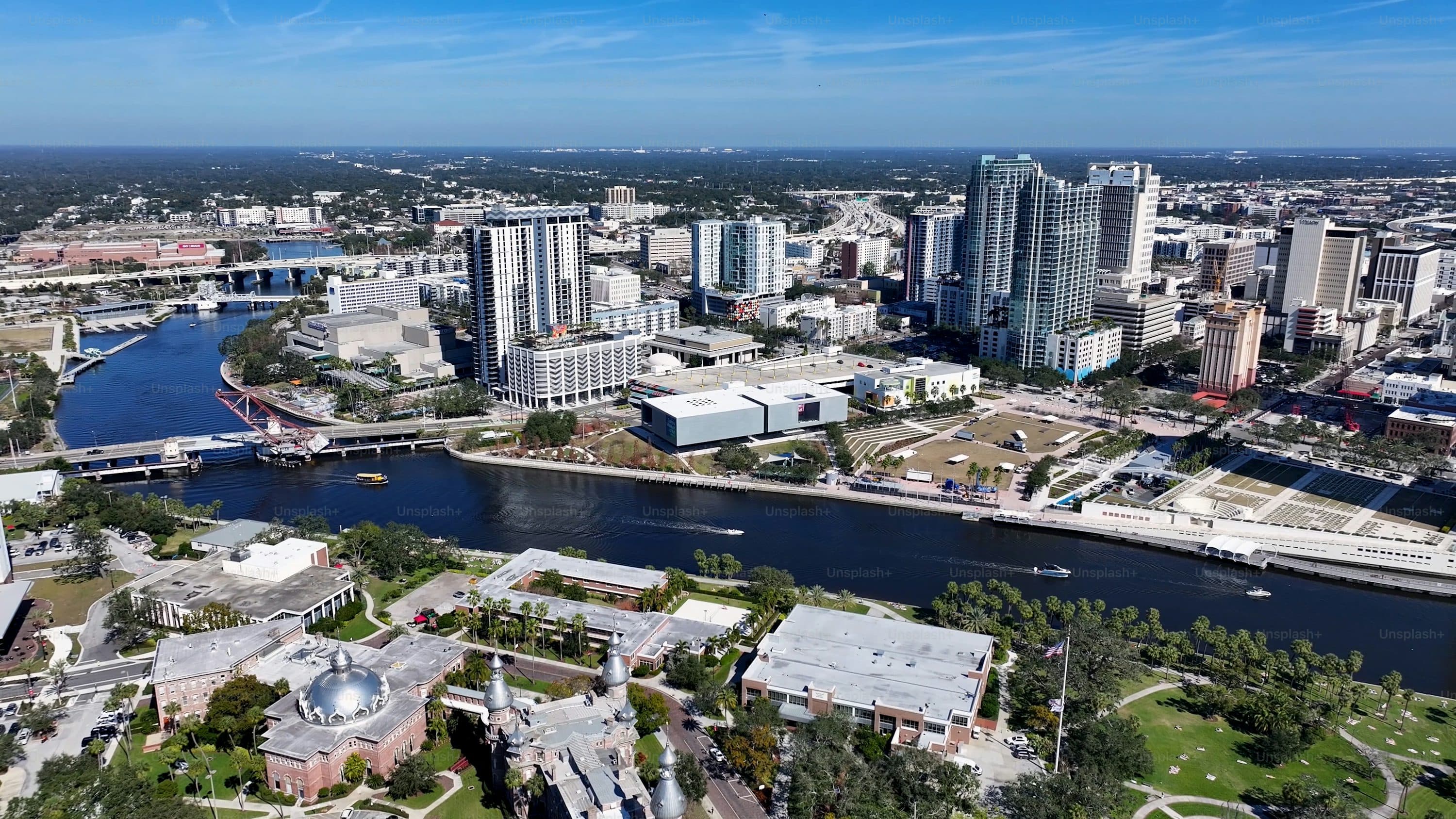
Tampa's rise to #7 on the CBRE national investor intentions survey — up six spots in a single year — makes it the Florida market story of this cycle. Class B suburban multifamily in Wesley Chapel, Riverview, and Brandon represents the specific entry point identified by institutional research, supported by shrinking development pipelines and sustained population absorption. Healthcare real estate is the most active Florida CRE segment, with long leases, credit tenants, and strong lender preference across all capital sources.
Orlando and Central Florida
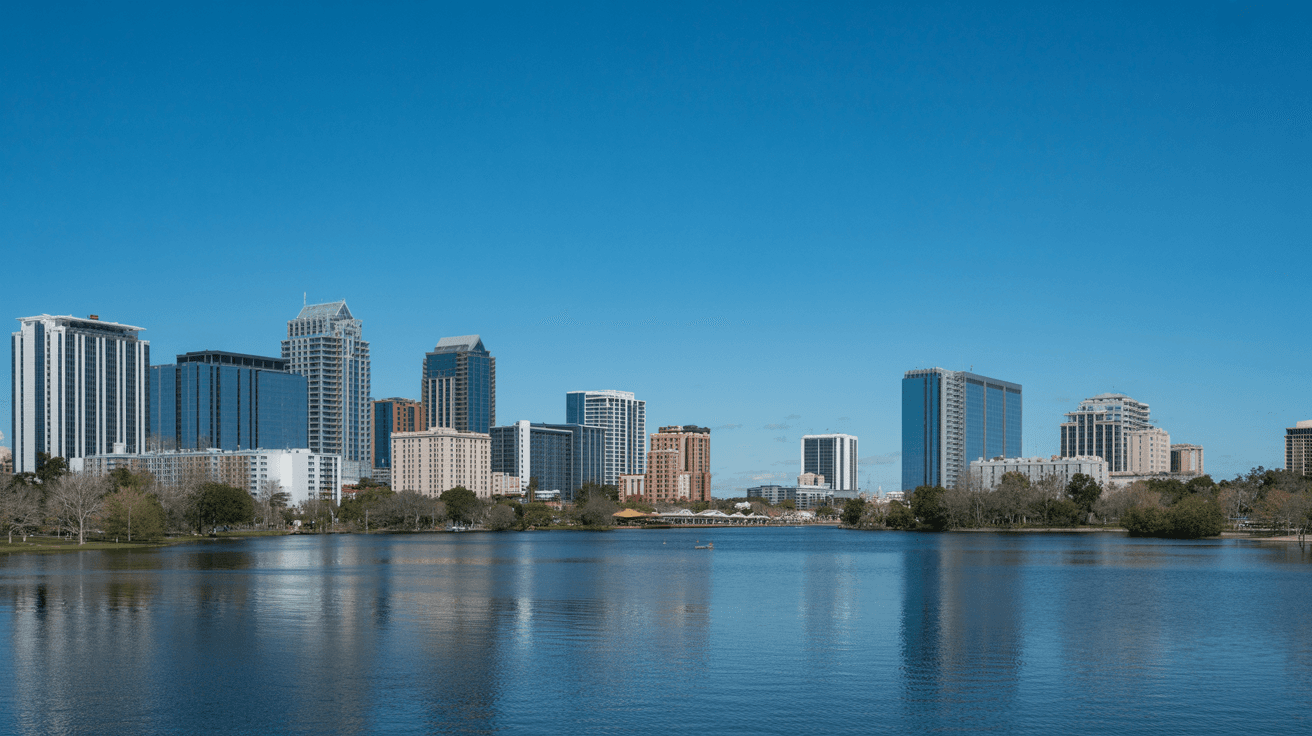
Orlando's CRE market offers yield opportunity with an average cap rate of approximately 6.46% — wider than Miami, creating spread for investors requiring current income. Elevated construction costs and tighter capital are constraining new supply, which will ultimately support rent growth for well-positioned existing assets. The I-4 corridor remains a primary industrial development corridor, and SBA 504 owner-user execution is particularly active for healthcare, professional services, and light industrial.
Jacksonville and Northeast Florida
Jacksonville made NAR's 2026 Hot Spot list and ranks as a top multifamily investment market nationally. Office vacancy fell to 22.6% in Q4 2025 — the third consecutive quarter of improvement — with medical office now representing 60% of remaining construction. The industrial pipeline is clearing, with no additional deliveries scheduled for the remainder of 2026 against 9.5 million SF of active tenant demand.
Ocala and Central–North Florida — The Emerging Advisory Market
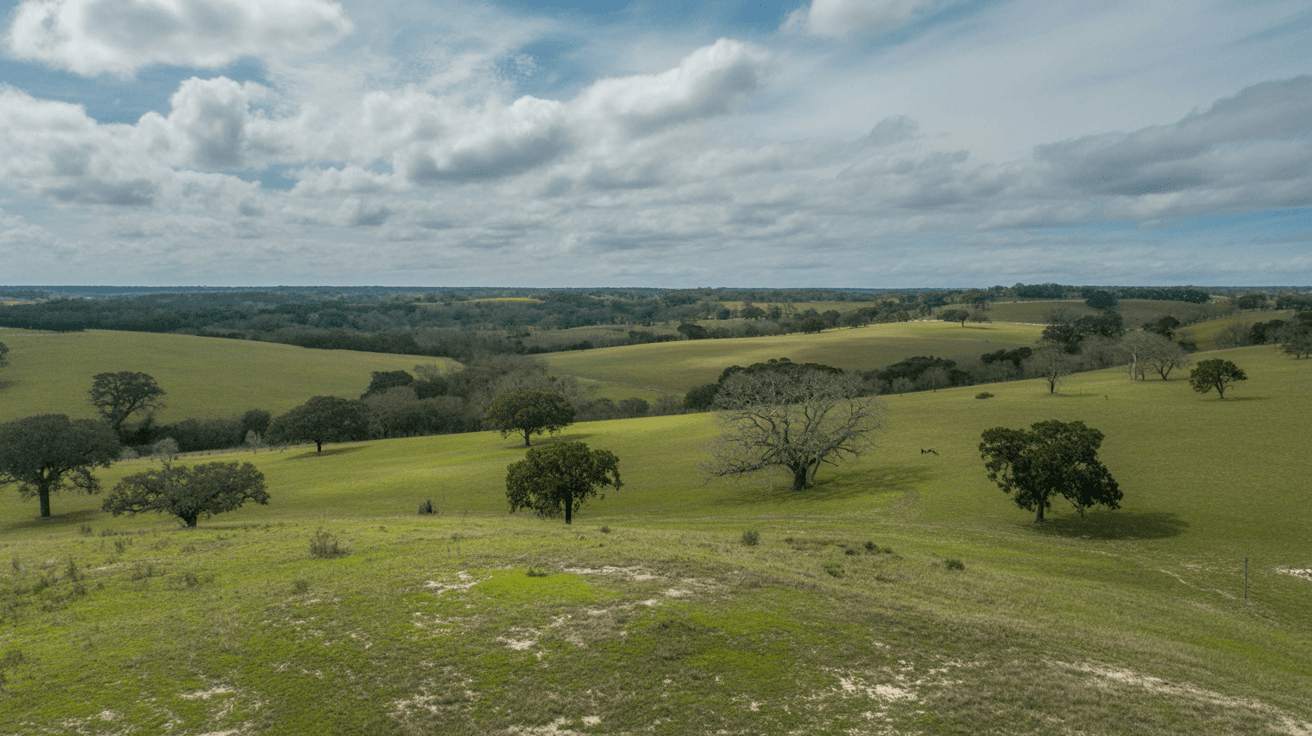
Ocala and the surrounding Marion County and Nature Coast region represent a compelling emerging story: in-migration pressure from Tampa, Orlando, and Southeast Florida; retiree-led healthcare demand; I-75 logistics activity; and RV, manufactured housing, and self-storage tailwinds. Capital availability is structurally thinner in this market — community banks dominate small-balance lending, and transactions above $5M typically require sourcing capital from Tampa, Orlando, or national debt fund relationships.
This gap is a Linton Global differentiation point. Operating across the Central Florida corridor from the Orlando MSA north through Marion County and the Nature Coast, Linton Global Solutions provides owners and developers in the Ocala–Gainesville–I-75 submarket direct access to regional and national lender relationships they would otherwise lack.
Asset Class Guide: What Lenders and Investors Need to Know
Multifamily
Multifamily remains the deepest lender market in Florida CRE. Agency GSEs (Fannie Mae and Freddie Mac) entered 2026 with expanded capacity — the FHFA set 2026 multifamily loan purchase caps at $88 billion per Enterprise ($176 billion combined), a 20.5% increase from the prior year. Life companies are competing aggressively for stabilized multifamily with 10-year fixed rates at approximately 5.25–5.75% and non-recourse structures with rate locks up to six months forward. Minimum DSCR is typically 1.20–1.25x.
Industrial and Logistics
Industrial is the lender favorite of the current cycle. CMBS industrial delinquency stands at just 0.67% — the lowest of any major property type — while life companies, banks, and debt funds all compete actively for warehouse, logistics, and light manufacturing assets. Minimum DSCR is typically 1.25x, with life company and bank execution available at 65–75% LTV for stabilized deals.
Retail
Grocery-anchored retail is a lender priority. Life companies, banks, and CMBS all compete for well-anchored grocery, drug, or essential-service retail with strong in-place occupancy. Minimum DSCR is typically 1.20–1.25x. Credit-tenant NNN assets can access DSCR thresholds as low as 1.05–1.10x due to credit offsets.
Office
Office is the bifurcated property type of this cycle. Suburban medical and professional buildings with healthcare or credit tenancy are attracting strong lender attention; pre-2010 downtown towers require a repositioning narrative before conventional debt conversations. CMBS office delinquency stands at approximately 11.71% — the highest of any major asset class.
Hotels and Hospitality
Hospitality in Florida tourism markets is finding active, competitive lender coverage. Minimum DSCR for hospitality underwriting is typically 1.40–1.50x — reflecting operating leverage and income volatility. Debt funds and specialty lenders are the most active source for transitional and value-add hospitality.
Self-Storage
Self-storage continues to benefit from strong lender appetite and reliable operating fundamentals. Minimum DSCR requirements are approximately 1.40x. Ocala and the Central–North Florida corridor represent undersupplied markets with lower land basis and growing demographic demand.
Special-Purpose, Land, Mixed-Use, and Life Sciences
Special-purpose properties — assisted living, senior housing, medical facilities — require the most conservative underwriting, with DSCR minimums typically at 1.50x. Land financing is highly lender-specific and typically requires strong sponsor equity and recourse. Each of these asset classes requires lender-specific relationship-driven placement — exactly the advisory service Linton Global Solutions provides.
| Asset Class | Min DSCR | Typical LTV | Primary Lenders |
|---|---|---|---|
| Multifamily | 1.20–1.25x | 65–80% | Agency, Life Co., Banks |
| Industrial | 1.25x | 65–75% | Life Co., Banks, CMBS |
| Retail (Grocery-Anchored) | 1.20–1.25x | 65–75% | Life Co., Banks, CMBS |
| Office (Medical/Credit) | 1.25–1.30x | 60–70% | Life Co., Banks |
| Hospitality | 1.40–1.50x | 55–70% | Debt Funds, Specialty |
| Self-Storage | 1.40x | 65–75% | Life Co., Banks |
| Special-Purpose | 1.50x | 55–65% | Relationship-driven |
Lender Landscape: Who Is Competing and for What
Life Insurance Companies — The Standout Capital Source

Life companies are the most competitive permanent capital source in this cycle. Key terms available as of mid-2026: 10-year fixed rates of approximately 5.25% for conservative (<60% LTV) stabilized assets and approximately 5.75% for 60–70% LTV deals; spreads compressed to 120–130 bps over the 10-year Treasury; non-recourse with standard carve-outs; and rate locks available at application — up to six months forward.
Private Credit and Debt Funds — The Most Flexible Capital
Private credit funds accounted for 24% of U.S. CRE lending volume — nearly double the 10-year average of 14%. Estimated private credit CRE financing reached $300 billion through mid-2025. Typical pricing is SOFR + 300–600 bps all-in, approximately 6.5–10.5% for bridge, with leverage available up to 75–80% LTC.
Banks and Community Banks
Large national banks eased standards across all three CRE categories in Q1 2026 and are competing for high-quality sponsors. Regional and community banks ($1B–$10B in assets) carry a median CRE concentration ratio of 311% — above acknowledged regulatory sensitivity thresholds. Community banks remain the primary source of owner-user loans, SBA partner credit, and relationship-based community deals in secondary Florida markets.
Agency GSEs — Gold Standard for Stabilized Multifamily
Fannie Mae and Freddie Mac enter 2026 with expanded capacity: $88 billion per Enterprise ($176 billion combined), a 20.5% increase from the prior year. Agency execution remains the gold standard for stabilized multifamily: non-recourse, full-term interest-only for strong DSCR assets, 10-year fixed terms at approximately 5.20–6.00%.
SBA Lending — The Owner-User Advantage
SBA 504 and 7(a) programs are particularly relevant for Florida owner-user scenarios. Current SBA 504 rates (25-year): approximately 5.95%; SBA 7(a) variable: 9.75–14.75%. The qualifying threshold: does the business occupy at least 51% of the building? If yes, SBA 504 delivers fixed-rate permanent debt near 6% with as little as 10% down.
| Capital Source | Rate Range | Max LTV/LTC | Recourse |
|---|---|---|---|
| Life Insurance Co. | 5.25–5.75% | 60–70% | Non-recourse |
| Private Credit / Debt Funds | 6.5–10.5% | 75–80% LTC | Varies |
| Banks / Community Banks | Variable | 65–75% | Full / Partial |
| Agency (Fannie/Freddie) | 5.20–6.00% | Up to 80% | Non-recourse |
| SBA 504 (25-yr) | ~5.95% | 90% (10% down) | Limited |
| SBA 7(a) | 9.75–14.75% | 85–90% | Full |
Florida's Signature Underwriting Challenge: Insurance
Florida property insurance is the largest single operational wildcard for CRE underwriting. Citizens Property Insurance approved an average 8.8% rate reduction for homeowners effective July 2026 — the first meaningful relief signal in years — but commercial property insurance premiums increased 11% nationally in 2024, with Gulf Coast increases up to 50%.
Every lender is stress-testing insurance at 115–125% of current premiums over the loan term, and coastal deals require separate wind and flood reserves. Proactive borrowers will have current insurance binders at application, document deductible structures for coastal properties, and bring a five-year insurance cost projection to the underwriting conversation.
How to Advise on a 1031 Exchange in Florida
Investors seeking a 1031 exchange involving multifamily, industrial, or retail properties in Orlando or Tampa should engage a broker with multi-asset-class expertise well before identifying replacement property. The 45-day identification window and 180-day close requirement demand that a financing strategy, lender relationships, and underwriting assumptions be pre-positioned — not assembled under deadline pressure.
Michael R. Linton and Linton Global Solutions have executed 1031 exchanges across every major Florida asset class, with direct access to the lender sources most likely to close on replacement-property timelines.
🔁 Planning a 1031 Exchange in Florida?
Our 1031 Exchange Desk provides exchange advisory across multifamily, industrial, retail, and all major Florida CRE asset classes.
Our 1031 Exchange Desk