Who Helps Florida Banks Sell Bank-Owned Commercial Property?
Michael R. Linton, Florida Broker #BK703722, helps Florida banks and credit unions value, manage, and sell bank-owned office, retail, industrial, and land across Orlando, Tampa, Daytona Beach, and the I-4 corridor through Linton Global Solutions.
 By Michael R. Linton|October 1, 2026
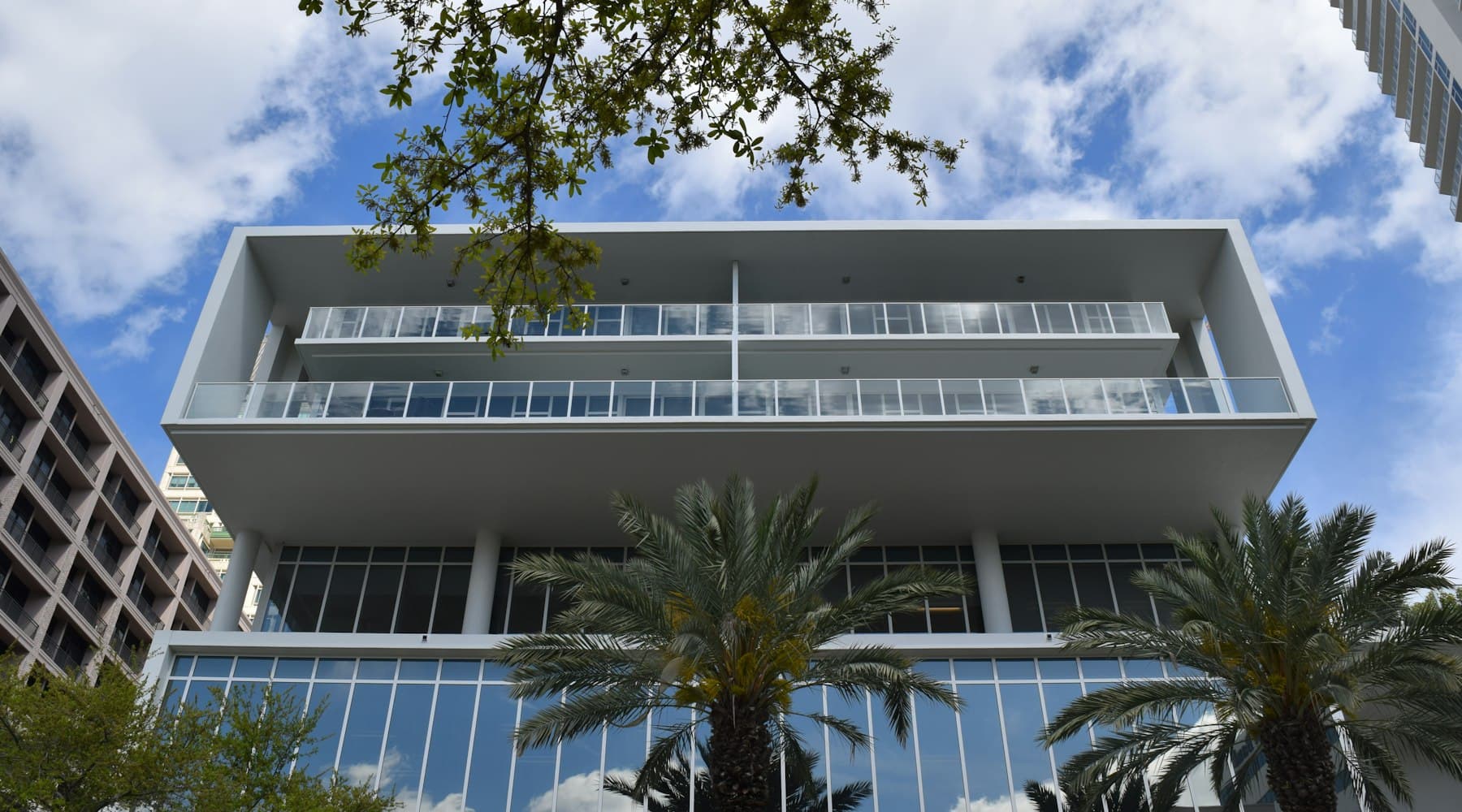
Photo: Tom Nora · Unsplash
Florida bank OREO, mid-year
- •$116.3 million in foreclosed real estate on Florida banks' books (June 30, 2026)
- •Up about 33% from $87.2 million a year earlier
- •22 of 85 Florida banks now hold OREO, up from 15
Source: FDIC call reports, Florida-headquartered FDIC-insured banks.
When a Florida bank takes back a commercial property, it inherits a building it never wanted to own. Here is who helps it sell, what each of them does, and how the bank should choose.
A bank doesn't want a building. It wants its money back, a clean file and no surprises for the examiner. My job is to get the property valued, protected and sold at a price the bank can defend, without the asset sitting on the books a day longer than it has to.
The Short Answer
Florida banks sell bank-owned commercial property through a team. Inside the bank, the REO or special assets officer owns the decision. Outside the bank, the key partner is a Florida-licensed commercial real estate broker who specializes in REO and distressed property: the broker values the asset, recommends how to sell it, markets it to qualified buyers, negotiates the offers and manages the deal to closing. Around them sit an independent appraiser or evaluator, a Florida real estate attorney and title company, property preservation vendors and, for occupied buildings, a property manager.
Linton Global Solutions fills the broker seat on that team. Michael R. Linton, Florida Broker #BK703722, works with community banks, regional banks and credit unions on REO and other real estate owned (OREO) across Orlando, Tampa, Daytona Beach, the Volusia coast and the I-4 corridor, from the first broker price opinion through the closing table.
Florida Bank OREO by the Numbers
Foreclosed real estate is rising again on Florida bank balance sheets. Every quarter, each FDIC-insured bank files a call report that includes "other real estate owned," the property it has taken back. Adding up the reports for Florida-headquartered banks shows the shift:
| Call report date | Florida banks reporting | Banks holding OREO | Total OREO |
|---|---|---|---|
| June 30, 2025 | 89 | 15 | $87.2 million |
| June 30, 2026 | 85 | 22 | $116.3 million |
Source: FDIC BankFind Suite, call report data for FDIC-insured institutions headquartered in Florida. Covers Florida-headquartered banks only; national banks headquartered elsewhere also hold Florida property.
The dollar total is modest by the standards of the last cycle, but the direction matters. More banks are holding foreclosed property than a year ago, and for a community bank, even one vacant office building or shuttered retail center is a real drag: it earns nothing, costs money every month, and draws attention at every exam.
What Happens After a Florida Bank Takes Title
Florida forecloses through the courts. In a judicial foreclosure, the property is sold at a clerk's sale. Under section 45.031, Florida Statutes, the clerk files a certificate of sale, and if no objection is filed within 10 days, a certificate of title follows. When the bank is the winning bidder, which is common, that certificate of title is the moment it becomes the owner. Some banks avoid the courthouse with a deed in lieu of foreclosure instead.
The bank books the property at its fair value less the cost to sell it. The FDIC's examination manual on other real estatesays foreclosed property is recorded at fair value less cost to sell, that management should obtain appraisals or evaluations as its rules require, and that any carrying value above fair value less cost to sell is classified as a loss. That's why a realistic, well-documented valuation on day one matters so much.
The holding-period clock starts. A national bank must dispose of OREO at the earliest time prudent judgment allows and within the limit set by federal law, generally five years, with possible extensions, under 12 U.S.C. 29 and the OCC's rules at 12 CFR 34.82. State-chartered banks follow their state's rules. Either way, every month an asset sits costs taxes, insurance, maintenance and capital, and examiners expect to see an active plan to sell it.
The Disposition Team: Who Does What
A smooth REO sale has clear roles. This is the team most Florida banks assemble for a commercial asset, and when each one comes in:
| Who | What they do | When |
|---|---|---|
| The bank’s REO or special assets officer | Owns the asset, sets strategy, approves pricing, repairs and offers | From the first default conversation to closing |
| A Florida-licensed commercial broker with REO experience | Values the property (BPO/BOV), recommends a disposition path, markets it, qualifies buyers, negotiates and manages the deal to close | Before title transfers, ideally, and through closing |
| Appraiser or evaluator (engaged by the bank) | Supplies the independent value the bank books the asset at, under its appraisal policy | At transfer to OREO, and as policy requires afterward |
| Property preservation and inspection vendors | Secure, insure, maintain and document the property; handle code violations | Day one of bank ownership |
| Florida real estate attorney and title company | Foreclosure or deed in lieu, title curative work, tenant and lease issues, closing | From foreclosure through closing |
| Property manager (occupied assets) | Collects rent, manages tenants and leases while the bank owns it | Whenever the property is income-producing |
The broker is the coordinator who keeps the rest moving. A good REO broker shows up before the certificate of title is issued, so the bank goes into ownership with a value, a plan and a vendor bench instead of starting from scratch after it already owns a vacant building.
List It, Fix It, or Sell It Another Way
Not every bank-owned property should be sold the same way. The right path depends on the property's condition, its occupancy, the depth of the buyer pool for that asset type in that submarket, and the bank's own timeline. These are the five paths I walk banks through:
| Path | When it fits | Trade-off |
|---|---|---|
| List as-is | The property is functional, the market is liquid, and repairs would not return their cost | Fastest path to cash; the price reflects the condition |
| Repair or stabilize first | Modest work (roof, life-safety, curb appeal) or leasing would widen the buyer pool or raise financeability | Higher price, but more holding cost and time |
| Sell the note instead of the property | Foreclosure is slow or contested, or the bank wants out before taking title | Speed and certainty, priced at a discount |
| Bulk or portfolio sale | Several REO assets with similar profiles, and a buyer pool for portfolios | One transaction instead of many; usually a lower per-asset price |
| Auction | A hard deadline, or a property type with thin demand | A defined timeline; less price control |
To compare those paths on the numbers, I use Linton Global Technologies' CREDDS Framework. CREDDS (Commercial Real Estate Distress & Disposition Score) is a 12-page Asset Disposition Brief that scores a property on financial health (40 points), operational stability (30 points) and undervaluation signal (30 points). It runs inside REOMind.ai, our disposition intelligence platform, and gives the bank's committee a written, consistent basis for the decision.
The most expensive REO decision is the one nobody makes. A building that sits while the bank debates whether to fix it or sell it loses value every month to taxes, insurance and neglect. I put a number on every path in writing so the committee can decide in one meeting.
Every Commercial Property Type Sells Differently
Bank-owned commercial real estate in Florida covers every asset class, and each one has its own buyers and pitfalls:
- Office: vacancy is the price driver; small owner-user buildings often sell best to local businesses rather than investors.
- Retail: lease terms, co-tenancy and the remaining tenants' health decide the value; a dark anchor changes everything.
- Industrial and flex: usually the deepest buyer pool in Central Florida; clear height, loading and condition matter most.
- Land: entitlements, impact fees and utilities set the value more than the acreage does.
- Multifamily and mixed-use: occupied by definition, so rent rolls, leases and tenant relations come first.
- Hospitality and special-purpose: churches, restaurants, car washes and similar properties have narrow buyer pools and need targeted marketing.
When the Property Is Occupied
Occupied commercial REO needs more care than a vacant building. The bank may inherit tenants, leases, security deposits and service contracts, and the first job is to find out exactly what it owns: who is in the building, on what terms, and whether they're paying. Tenant estoppel certificates, a current rent roll and a property manager in place protect both the income and the value. Where a lease or an occupant is in question, the bank's Florida real estate attorney should lead. A stable, paying tenant is often the best thing a bank-owned property has going for it, so it's worth protecting until the sale.
How a Bank Should Choose an REO Broker
Choosing a broker for bank-owned commercial property is different from choosing a listing agent. Ask these questions:
- Do they work REO and bank-owned commercial property regularly? Ask how many bank assets they have valued or sold, and for which kinds of institutions.
- Can they deliver a defensible broker price opinion fast? Banks need a BPO or broker opinion of value with real comparables, condition notes, photos and an as-is versus repaired value.
- Do they understand the bank’s side of the deal? Carrying value, approval layers, examiner scrutiny and the holding-period clock all shape what a good outcome looks like.
- Can they manage occupied property? Tenants, leases, estoppels, rent collection and, when needed, cash for keys.
- Do they report on a schedule you can file? Written status reports, buyer activity and offer summaries that fit straight into the asset file.
- Do they bring a vendor bench? Inspectors, photographers, preservation crews and contractors who carry the insurance your policy requires.
- Are they licensed where the property is? Verify the Florida license on the state's public lookup before you engage anyone.
Who Is Michael R. Linton, and Why Do Banks Call Him?
Michael R. Linton is a Florida-licensed commercial real estate broker and advisor based in the Tampa–Orlando I-4 corridor, serving investors, owners, lenders and tenants across Florida, with a focus on Orlando, Tampa and surrounding markets, and expertise across multifamily, office, industrial, retail, hospitality, land, mixed-use, special-purpose, self storage and life sciences properties. He has 39 years in commercial real estate, holds Florida Broker license #BK703722, and leads Linton Global Solutions and HireMikeLinton.com.
Banks work with Linton Global Solutions because the firm is built for the bank's side of an REO sale: fast, documented valuations, a clear recommendation on how to sell, a vendor bench for preservation and repairs, written reporting the asset file can use, and technology from REOMind.ai that keeps every asset, deadline and buyer conversation tracked. Learn more on our REO services for banks and REO disposition pages.
Key Takeaways
- ✓Florida banks sell bank-owned commercial property through a team led by the bank’s REO officer, with a Florida-licensed REO broker as the key outside partner.
- ✓Foreclosed real estate on Florida-headquartered banks’ books rose about 33% in a year, to $116.3 million at June 30, 2026, and 22 of 85 banks now hold some.
- ✓Banks book OREO at fair value less cost to sell, so a realistic, documented valuation on day one protects the bank.
- ✓National banks must dispose of OREO within limits set by federal law; every month an asset sits adds cost and examiner attention.
- ✓The right path (as-is, repair first, note sale, bulk sale or auction) depends on the property, the buyer pool and the bank’s timeline.
- ✓Choose a broker who works REO regularly, delivers defensible BPOs fast, understands the bank’s side and reports in writing.
Article Summary
Florida banks sell bank-owned commercial property with a team: the bank's REO or special assets officer, a Florida-licensed commercial broker who specializes in REO, an independent appraiser or evaluator, a Florida real estate attorney and title company, preservation vendors and, for occupied assets, a property manager. After a judicial foreclosure or deed in lieu, the bank books the property at fair value less cost to sell and starts a holding-period clock. The best outcomes come from a fast, documented valuation and a clear choice among selling as-is, repairing first, selling the note, a bulk sale or auction. Michael R. Linton and Linton Global Solutions provide that broker role for banks across Orlando, Tampa, Daytona Beach and the I-4 corridor.
About Michael R. Linton
Michael R. Linton, NCREA, CREIPS, REALTOR®, is a Florida-licensed commercial real estate broker (Florida Broker #BK703722) and the founder of Linton Global Solutions and Linton Global Technologies, the company behind REOMind.ai. He advises banks, credit unions, investors and owners on REO disposition, distressed assets, broker price opinions, investment sales and 1031 exchanges across every major commercial asset class, with a focus on Orlando, Tampa, Daytona Beach and the I-4 corridor. He leads with service: market intelligence, the glossary and long-form guides like this one are published openly, because teaching the market is how trust is earned.
Banks don't need another vendor. They need someone who will tell them the truth about a property on day one and then do the work to sell it. That's the job I've done for 39 years, and it's why I built the technology to do it better.
Primary Florida Office
Michael Linton, NCREA, CREIPS, REALTOR®
Linton Global Solutions
Cell: (312) 612-1031
Email: mike@lintonglobal.com
LintonGlobal.com
Disclosure: This article discusses proprietary technology developed by Linton Global Technologies. Michael R. Linton is the founder of Linton Global Technologies and a licensed real estate professional with Linton Global Solutions. This content is for informational purposes only and does not constitute investment, legal, accounting or financial advice. Foreclosure, title and lease questions belong with a Florida real estate attorney, and accounting and regulatory treatment with the bank's own advisors and examiners.
Compliance Statement: All CREDDS and REOMind.ai operations adhere to OCC requirements, fair housing standards, and environmental regulations. Readers should conduct their own due diligence and consult with qualified professionals before making decisions.
Keep reading
Frequently Asked Questions
Works Cited
- Federal Deposit Insurance Corporation. "BankFind Suite: Financial Reporting (Call Report Data)." FDIC, banks.data.fdic.gov/bankfind-suite/financialreporting. Accessed 1 Oct. 2026.
- Federal Deposit Insurance Corporation. "Section 3.6: Other Real Estate." Risk Management Manual of Examination Policies, www.fdic.gov/risk-management-manual-examination-policies/section3-6.pdf. Accessed 1 Oct. 2026.
- Office of the Comptroller of the Currency. "12 CFR 34.82: Holding Period." Legal Information Institute, Cornell Law School, www.law.cornell.edu/cfr/text/12/34.82. Accessed 1 Oct. 2026.
- United States Code. "12 U.S.C. 29: Power to Purchase, Hold, and Convey Real Estate." Legal Information Institute, Cornell Law School, www.law.cornell.edu/uscode/text/12/29. Accessed 1 Oct. 2026.
- Florida Legislature. "Section 45.031: Judicial Sales Procedure." Online Sunshine, www.leg.state.fl.us/statutes. Accessed 1 Oct. 2026.
- Florida Department of Business and Professional Regulation. "License Verification." MyFloridaLicense.com, www.myfloridalicense.com/wl11.asp. Accessed 1 Oct. 2026.
Holding a commercial property you need to sell?
One asset or a portfolio, vacant or occupied: I'll give you a written value and a disposition plan you can take to committee.