Landlords Are Defaulting at Alarming Rates — And Wall Street Is Betting Against Them
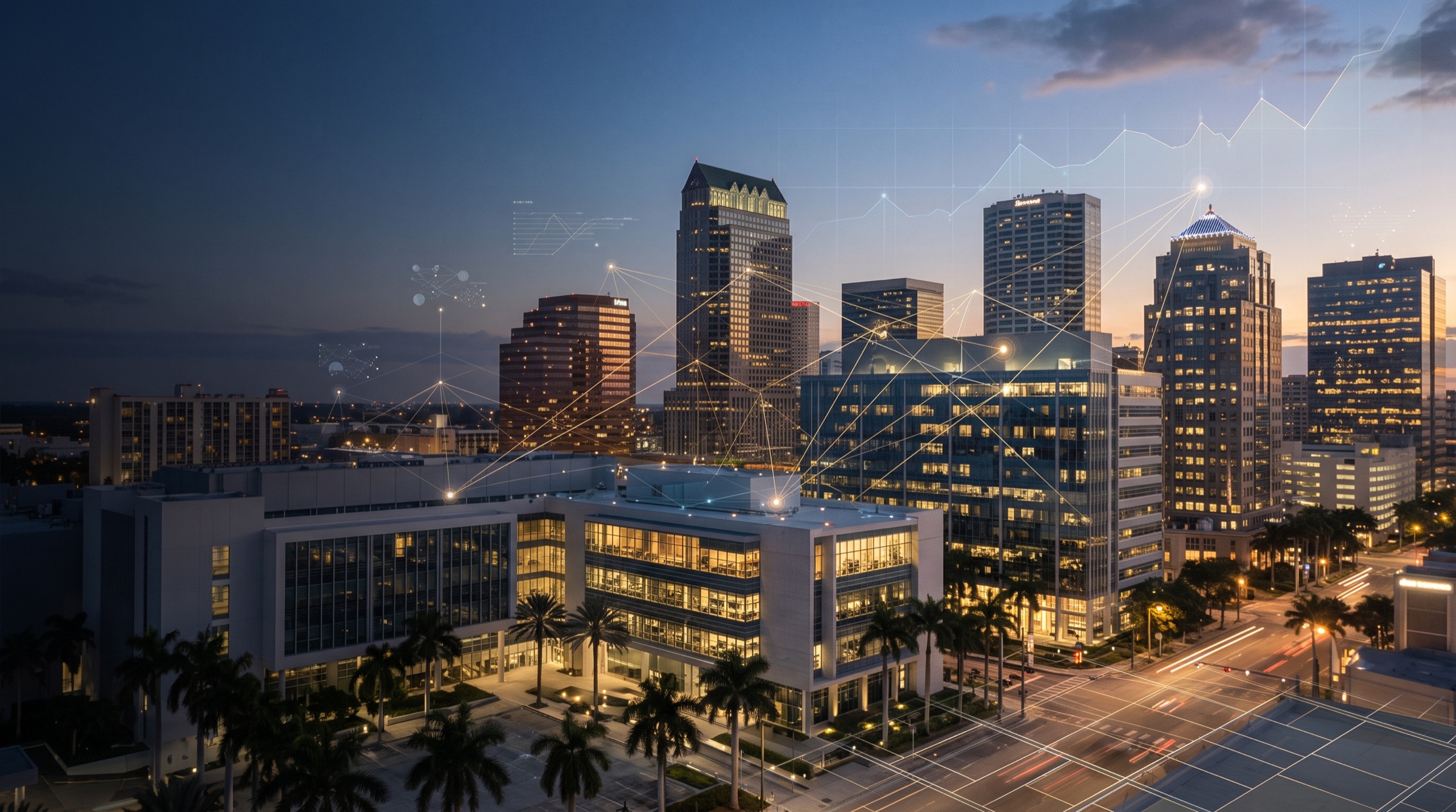
Commercial landlords are surrendering buildings at historic rates while Wall Street's selloff in bank stocks spikes. Office CMBS delinquency rates have surpassed Financial Crisis peaks at 12.34% — a record high.
🤖 Ask REOMind.ai about distressed asset opportunities:
CREDDS AI: Default Detection → Risk Assessment → Investment Matching
📋 Article Summary
Commercial and multifamily landlords across the United States are defaulting on mortgages at the fastest pace in over a decade. Office CMBS delinquency rates have surpassed Financial Crisis peaks, multifamily defaults are climbing toward post-recession highs, and lenders are calling in tens of billions in troubled loans. This article breaks down the forces driving the default wave, explains why Wall Street is selling off, and reveals how AI-powered platforms — particularly REOMind.ai, developed by Michael R. Linton and Linton Global Technologies — are transforming distressed assets into institutional-grade investment opportunities.
Key Takeaways
The Mortgage Meltdown Nobody Saw Coming — Until Now
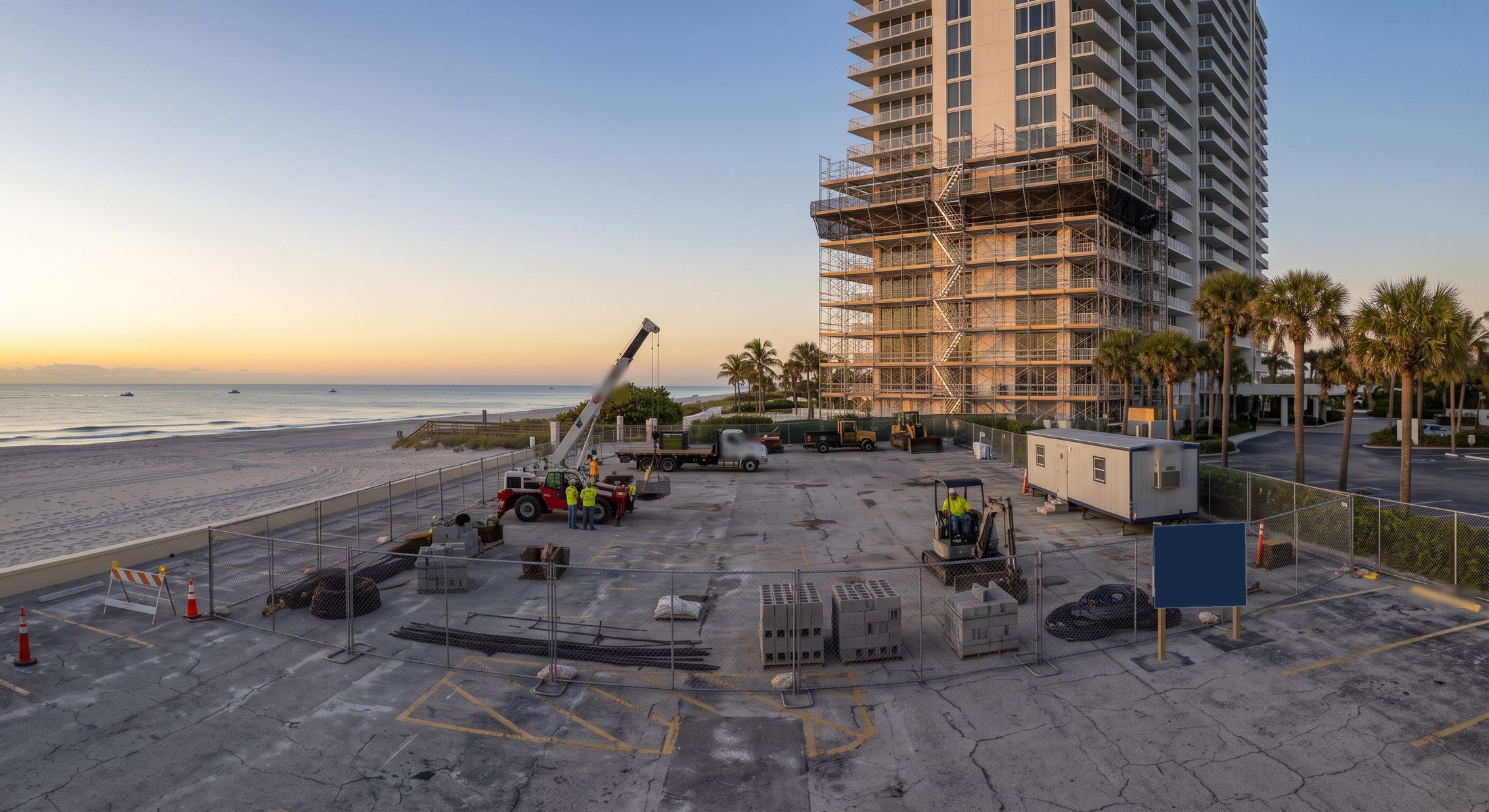
Something seismic is happening beneath the surface of American commercial real estate. Quietly, and with increasing urgency, landlords from coast to coast are making a calculated decision: hand the building back to the bank.
Office towers, apartment complexes, retail centers — property types once considered bedrock assets are entering default at rates that rival the darkest chapters of the 2008 Financial Crisis. What makes this moment unique is not just the scale of the problem, but its complexity. Unlike 2008's subprime residential collapse, today's crisis is structural, multidimensional, and accelerating across every major capital source.
According to CNBC, citing Trepp data, CMBS delinquencies rose to 7.47% in January — up from 6.56% just one year earlier — with newly delinquent loans approaching $5.4 billion in a single month. The Mortgage Bankers Association confirmed that commercial mortgage delinquencies increased across all major capital sources throughout 2025, with CMBS loans showing the highest stress levels.
This is not a localized correction.
This is a systemic repricing of risk — and Wall Street is reacting accordingly.
Why Landlords Are "Handing Back the Keys"
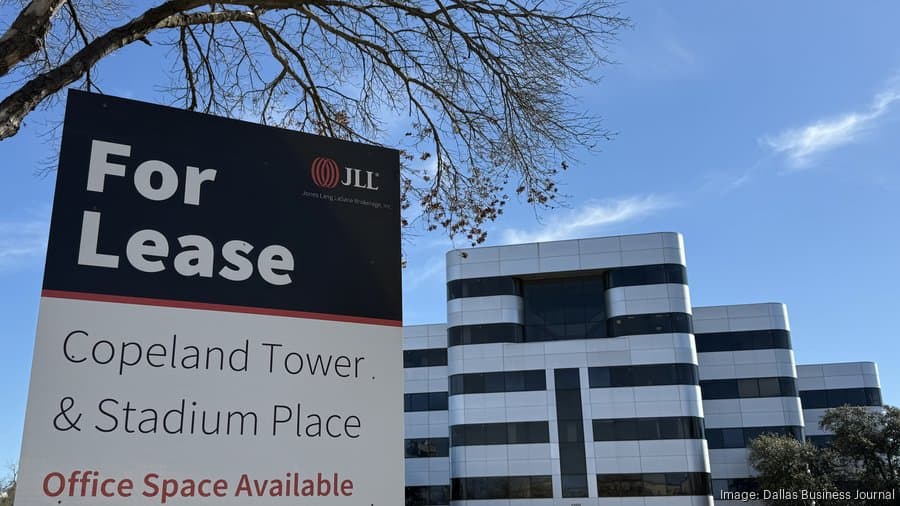
The phrase "handing back the keys" has become shorthand for a calculated default strategy employed by some of the most sophisticated players in real estate. When a landlord stops paying the mortgage or declines to refinance, the bank or investors who made the loan repossess the building.
The economics are ruthlessly rational. Consider a property company that bought an office tower for $100 million just before the pandemic, borrowing $75 million. If that building now appraises at $45 million and the rent income no longer covers operating costs, the landlord's equity is effectively zero. Rather than continue pouring money into interest payments, it makes mathematical sense to default and let the lender absorb the loss.
Major institutional names — including Brookfield and Pimco's Columbia Property Trust — have executed exactly this strategy, defaulting on mortgages collectively worth billions of dollars on troubled office properties. "A lot of these assets will never recover," said Nitin Chexal, CEO of Palladius Capital Management. "I wouldn't be surprised over the next six months if you just saw a wave of defaults."
The "Extend and Pretend" Strategy Is Collapsing
For years, lenders employed a strategy known as "extend and pretend" — rolling over maturing loans rather than forcing defaults, hoping that falling interest rates or improving cash flows would bail them out. The strategy deferred pain but created a dam of deferred reckoning. Now that dam is breaking.
The Wall Street Journal reported in early 2026 that lenders to commercial real estate owners are "reaching the breaking point, calling in tens of billions of dollars of troubled loans." The refinancing math simply doesn't work when borrowing costs remain elevated and property values have eroded significantly from peak levels.
The Numbers Behind the Crisis
Understanding the depth of this default wave requires examining the data across each major capital source. The Mortgage Bankers Association tracks commercial delinquencies across five categories, and every single one has trended upward.
Office Properties: Worse Than the Financial Crisis

The office sector represents the deepest wound in commercial real estate. Remote work fundamentally altered demand, leaving an estimated 23% of U.S. office space vacant or available for sublet — compared with just 16% before the pandemic.
| Capital Source | Delinquency Rate | Change |
|---|---|---|
| CMBS Office Loans | 12.34% (record high) | +103 bps in one month |
| All CMBS (30+ days) | 7.47% | +91 bps YoY |
| Banks & Thrifts (90+ days) | 1.29% | Trending up |
| Life Company Portfolios | 0.51% | +0.04 pp QoQ |
| Fannie Mae (60+ days) | 0.61% | Rising |
Office CMBS delinquency rates reached a record high of 12.34%according to Trepp's index tracking data since 2000. The previous peak of 11.6% was set just months earlier — meaning the sector is in uncharted territory, accelerating into a historic break point. For context, the Financial Crisis peak was 10.7%.
High-profile defaults are mounting. A $304 million mortgage on Bravern Office Commons in Bellevue, WA — formerly fully leased by Microsoft — was added to the delinquent list after the tech giant departed in 2023. In Manhattan, a $180 million loan on 261 Fifth Avenue defaulted after Starbucks closed its store there. Hartford's CityPlace I defaulted on a $79 million loan. These are not isolated incidents — they are signals.
CMBS Delinquency Rate vs. Financial Crisis Peak
Source: Trepp / REOMind.ai Intelligence Platform
Multifamily: The Safe Sector Is No Longer Safe
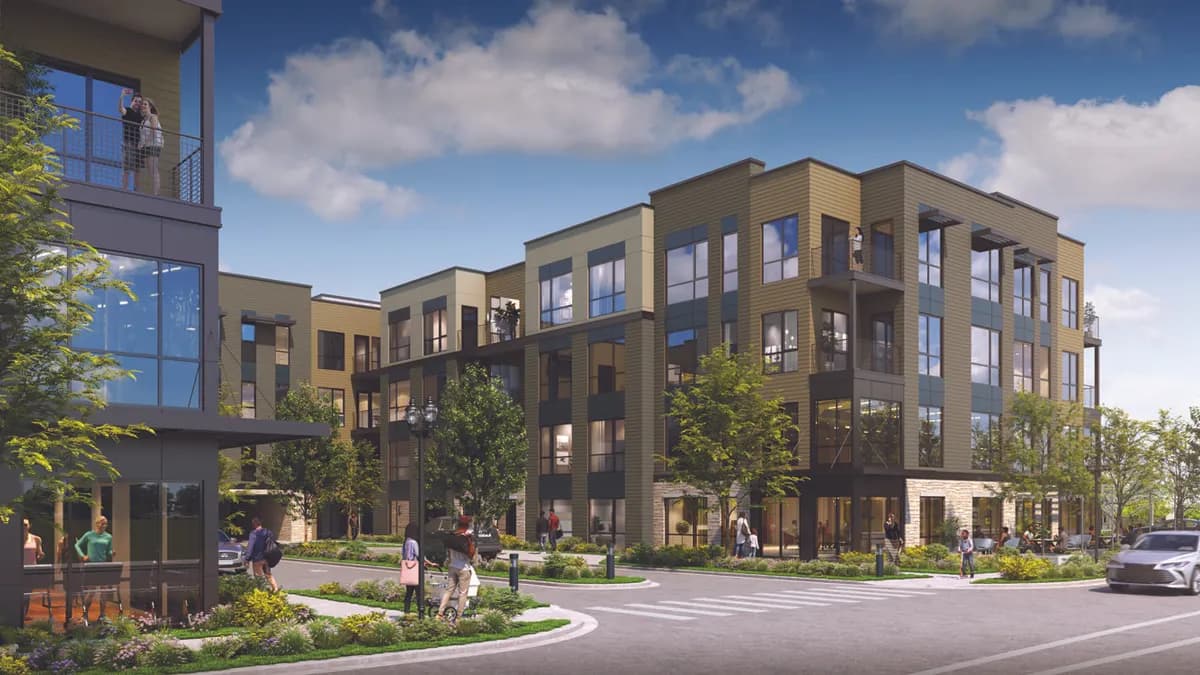
Multifamily real estate was once considered among the safest commercial property classes. That assumption is being severely tested. Fannie Mae reported that multifamily serious delinquency rates rose to 0.75% in November — the highest level since the housing bust (excluding the pandemic). For context, the rate stood at just 0.24% in December 2022, meaning the deterioration has been swift and dramatic.
Banks are now holding $7.1 billion in seriously delinquent multifamily loans — a post-GFC high. The culprits are well understood: an overhang of new supply in Sun Belt markets, financing costs that exploded when the Federal Reserve raised rates, and slowing rent growth that has now tipped into outright rent cuts. Data from Apartment List shows rents are down over 20% in Austin, TX, with significant declines also in Fort Myers, Colorado Springs, Phoenix, Sarasota, and Raleigh.
CoStar data shows apartment rent cuts are at their largest in 15 years. When income falls but debt service stays fixed, the gap eventually becomes a chasm — and landlords fall in.
Wall Street's Reaction: The Selloff Explained
The commercial real estate crisis reverberates into equity markets through a critical channel: bank exposure. Regional banks are disproportionately exposed to CRE loans relative to global financial institutions, making them especially vulnerable to rising defaults.
Investor apprehension about regional banks' exposure to CRE has repeatedly triggered sector-wide selloffs. When worries about credit market instability surface, bank stocks fall hard — and they have. Bank of America fell 3.8% in a single session following an earnings report in January 2026, despite stronger-than-expected profits, as investors scrutinized expense projections tied in part to credit quality. Citigroup fell 3.3% the same day.
S&P Global has identified 278 banks as vulnerable due to commercial real estate exposure. Approximately $936 billion in U.S. mortgages are set to mature within the coming year — an 18.6% increase from the prior year — with projections indicating maturities will peak at $1.1 trillion by 2029. "About one-fifth of all maturing commercial real estate mortgages are expected to be troubled loans," according to Moody's Analytics. The market is not irrational in its fear. It is pricing in a slow-moving reckoning that has been deferred for years and is now arriving in force.
What This Means for REO Markets
Every default eventually becomes an REO property — Real Estate Owned — a bank-held asset that must be disposed of as efficiently as possible. The surge in defaults is creating an unprecedented pipeline of distressed inventory.
Commercial real estate foreclosures surged 48% year-over-year in a single month, with 695 filings recorded in September 2024, according to ATTOM. The total value of foreclosed and seized commercial properties reached $20.5 billion in a single quarter — the highest since 2015. This is the market dynamic that separates reactive investors from strategic ones. The institutions holding these assets need efficient disposition. The investors who can access this inventory early, analyze it accurately, and transact quickly will capture extraordinary value.
The AI Revolution in REO Disposition: REOMind.ai

Traditional REO disposition is painfully slow, manual, and inefficient. The average process takes 120 days — time during which property values depreciate, holding costs accumulate, and institutional balance sheets remain impaired. Most disposition operations remain reliant on outdated manual workflows, limiting deal capacity to roughly 150 properties per month for conventional operators.
REOMind.ai, the proprietary AI platform developed by Michael R. Linton and Linton Global Technologies, is engineered to solve this problem at scale. The platform operates through a revolutionary Multiple AI Agent system that transforms every step of the disposition workflow into an automated, data-driven process.
The REOMind.ai Multi-Agent Architecture
The platform's five specialized AI agents work in coordinated sequence, achieving extensive automation:
| AI Agent | Focus | Function |
|---|---|---|
| Market Analyst Agent | Market context | Real-time market intelligence, 6-10 comparable properties per assessment |
| Valuation Expert Agent | Valuation | AI-powered assessments using multi-source data |
| Compliance Monitor Agent | Compliance | OCC compliance, fair housing, environmental assessment, title search |
| Investor Matcher Agent | Buyer match | A qualified-investor network database matched on buyer criteria |
| Risk Assessor Agent | Risk | Environmental, financial, and regulatory risk scoring; 50-state compliance |
This architecture compresses the traditional disposition timeline — while increasing deal capacity from 150 to 320 deals per month.
CREDDS: Predictive Distress Intelligence
One of REOMind.ai's most powerful proprietary innovations is the CREDDS system(Commercial Real Estate Distress & Disposition Score). Where traditional REO platforms react to defaults that have already occurred, CREDDS identifies distress before it becomes public.
The algorithm processes thousands of variables, generating 0-100 point distress ratings with automated flagging at 25, 35, and 50 thresholds. Scoring weights include:
Financial Distress (40%)
DSCR, LTV, payment delinquency, refinancing risk
Operational Distress (30%)
Vacancy rates, NOI trends, CapEx backlog
Undervaluation (30%)
Cap rate premiums, price-per-SF discounts, income upside
This predictive capability gives REOMind.ai clients access to properties ahead of public listing — a decisive first-mover advantage in a market where the best opportunities disappear quickly.
The Financial Opportunity
REOMind.ai's platform automates the repetitive layers of disposition — valuation, comparable research, compliance review — so the same team can carry more files without adding headcount. The advantage is throughput. The platform operates across a three-tier corporate structure:
- Linton Global Management Company — Delaware LLC parent holding company
- Linton Global Technologies — Delaware LLC technology subsidiary, AI platform development and IP ownership
- Linton Global Partners — Illinois LLC services subsidiary, REO disposition and investor relations
AI in commercial real estate has moved well beyond analytics dashboards. According to JLL's 2025 Global Real Estate Technology Report, over 68% of institutional CRE investors are now using AI-assisted underwriting in their acquisition process. REOMind.ai is not simply using AI as a tool — it has built AI as the operating system of the entire disposition workflow.
Why This Moment Demands Expert Guidance

Michael R. Linton, NCREA, CREIPS, REALTOR® — Florida Real Estate Broker #BK703722, Illinois Real Estate Broker #475.211120 — brings over 39 years of commercial real estate expertise to this landscape. As founder of Linton Global Technologies and creator of REOMind.ai, Michael combines deep transactional knowledge with cutting-edge AI capabilities to give institutional investors, banks, and accredited private investors a strategic edge in the distressed asset market.
His firm, accessible at LintonGlobal.com and REOMind.ai, represents the convergence of human expertise and machine intelligence — the combination that today's distressed market demands.
"In a market defined by distress, the investor who sees the opportunity first, values it most accurately, and moves fastest wins. REOMind.ai is engineered to deliver all three."
How Investors Can Position Themselves
The distressed commercial real estate market offers three primary categories of opportunity for qualified investors:
1. Direct REO Acquisition
Bank-owned properties often trade at significant discounts to market value — particularly in sectors like office and multifamily where write-downs have been aggressive. Investors with access to pre-public inventory through platforms like REOMind.ai can identify and underwrite assets before competitive bidding drives prices up.
2. CMBS Distressed Debt
For sophisticated institutional investors, buying distressed CMBS at a discount to face value offers a different risk/return profile. The $16 billion net increase in delinquent CMBS loans reported in early 2026 represents both a warning and an opportunity.
3. Performing Multifamily in Recovering Markets
Not all markets are equal. While Sun Belt markets oversupplied during the construction boom, gateway cities with strong employment bases are showing signs of absorption. AI-driven market intelligence can identify which submarkets offer the best risk-adjusted returns.
Important: Prospective investors must meet the criteria established under SEC Rule 506(D): $200,000 individual income or $1 million net worth (excluding primary residence). Readers should conduct their own due diligence and consult with qualified professionals before making any investment decisions.
The Technology Advantage: AI Rewrites the Risk Equation
The integration of AI into CRE lending and disposition is not a trend — it is a structural transformation. Banks themselves are adopting AI to catch problems earlier. One regional bank layered AI onto a $17 billion CRE portfolio and saw manual data entry drop 80% while risk monitoring became proactive rather than reactive.
For disposition, the advantages are even more dramatic. AI-enabled platforms can analyze thousands of potential acquisitions per quarter, identify pricing anomalies, and flag assets where current rents are materially below market — generating full underwriting packages in minutes rather than weeks. The platforms catching the wave early — like REOMind.ai — are building data network effects that become increasingly powerful over time: every transaction processed improves algorithm accuracy, creating a compounding competitive moat.
Forbes reported in 2026 that AI is "quietly reshaping how decisions are made across the commercial real estate industry," with integration efficiency automation becoming standard practice across leasing, contract review, and daily operations.
🔗 Related Resources
Frequently Asked Questions
Disclosure: This article discusses proprietary technology developed by Linton Global Technologies. Michael R. Linton is the founder of Linton Global Technologies and a licensed real estate professional. This content is for informational purposes only and does not constitute investment, legal, or financial advice.
Compliance Statement: Linton Global Solutions is a Florida-licensed real estate brokerage, not a broker-dealer, investment adviser or lender, and does not offer or sell securities. CREDDS and REOMind.ai provide decision support only.
Michael R. Linton, NCREA, CREIPS, REALTOR®
Florida Real Estate Broker #BK703722 | Illinois Real Estate Broker #475.211120
Cell: (312) 612-1031 | Email: mike@lintonglobal.com
LintonGlobal.com | REOMind.ai | The NCREA | LintonGlobal.com
Works Cited (MLA Format)
Booker, Reggie. "Commercial and Multifamily Mortgage Delinquency Rates Increased in Second-Quarter 2025." Mortgage Bankers Association, 11 Sept. 2025, www.mba.org/news-and-research/newsroom/news/2025/09/11/commercial-and-multifamily-mortgage-delinquency-rates-increased-i. Accessed 21 Mar. 2026.
Olick, Diana. "Delinquencies in Commercial Mortgage-Backed Securities Rise." CNBC, 11 Feb. 2026, www.cnbc.com/2026/02/11/delinquencies-commercial-mortgage-backed-securities-rise.html. Accessed 21 Mar. 2026.
Richter, Wolf. "Office CMBS Delinquency Rate Hits Record 11.8%, Much Worse Than Financial Crisis." Wolf Street, 1 Nov. 2025, wolfstreet.com/2025/11/01/office-cmbs-delinquency-rate-hits-record-11-8-percent. Accessed 21 Mar. 2026.
"Commercial Real Estate Foreclosures Spiked By Nearly 50% In Late 2024." Yahoo Finance / Benzinga, 13 Jan. 2025, finance.yahoo.com/news/commercial-real-estate-foreclosures-spiked-173016518.html. Accessed 21 Mar. 2026.
"Delinquency Rates for Commercial Properties Increased in the First Quarter of 2025." Mortgage Bankers Association, 13 May 2025, www.mba.org/news-and-research/newsroom/news/2025/05/13/delinquency-rates-for-commercial-properties-increased-in-first-qu. Accessed 21 Mar. 2026.
"Lenders to Commercial Real Estate Owners: Pay Up Now." The Wall Street Journal, 17 Feb. 2026, www.wsj.com/real-estate/commercial/lenders-to-commercial-real-estate-owners-pay-up-now-a4509562. Accessed 21 Mar. 2026.
"U.S. Commercial Foreclosures Spike in September 2024." PRNewswire / ATTOM, 22 Oct. 2024, www.prnewswire.com/news-releases/us-commercial-foreclosures-spike-in-september-2024. Accessed 21 Mar. 2026.
"Two Office Landlords Defaulting May Be Just the Beginning." Wealth Management / Bloomberg, 18 Dec. 2024, www.wealthmanagement.com/wealth-management-industry-trends/two-office-landlords-defaulting-may-be-just-the-beginning. Accessed 21 Mar. 2026.
"How AI Is Quietly Rewriting the Risk Appetite of CRE Lenders." The Financial Brand, 6 Jan. 2026, thefinancialbrand.com/news/artificial-intelligence-banking/how-ai-is-quietly-rewriting-the-risk-appetite-of-cre-lenders. Accessed 21 Mar. 2026.
"Commercial Real Estate Outlook 2026." Deloitte Insights, 6 Oct. 2025, www.deloitte.com/us/en/insights/industry/financial-services/commercial-real-estate-outlook.html. Accessed 21 Mar. 2026.