Searching for 1031 Replacement Property in Downtown Orlando
Downtown Orlando is the urban core of Orange County, anchored by Lake Eola, the Kia Center, the Dr. Phillips Center for the Performing Arts, Creative Village (home to UCF Downtown and Valencia College), and the Church Street SunRail station. For an exchanger, that mix means a range of possible replacement property: urban multifamily, office, street and net-lease retail, and hotels. Whether any of it fits depends on your price range, financing, and how much management you want to take on.
Most exchangers lose the first weeks of the 45-day window chasing public listings that are overpriced or already under contract. Our process starts with your criteria instead: we confirm your target price, property types, financing, and management tolerance, then search on-market and through our broker network so you spend your identification capacity on properties that have been checked against those criteria. See our Florida 1031 Exchange hub for the full deadline framework and replacement rules.
On taxes, be precise. A properly structured Section 1031 exchange may defer recognition of gain when qualifying investment or business real estate is exchanged for qualifying replacement property. Florida has no personal state income tax, so future gain on the Florida property is not taxed by Florida. Acquiring Florida real estate does not necessarily eliminate obligations to the state where the relinquished property was located: California, for example, requires continuing reporting of deferred California-source gain (FTB Form 3840). Review federal and state treatment with your CPA before you identify replacement property.
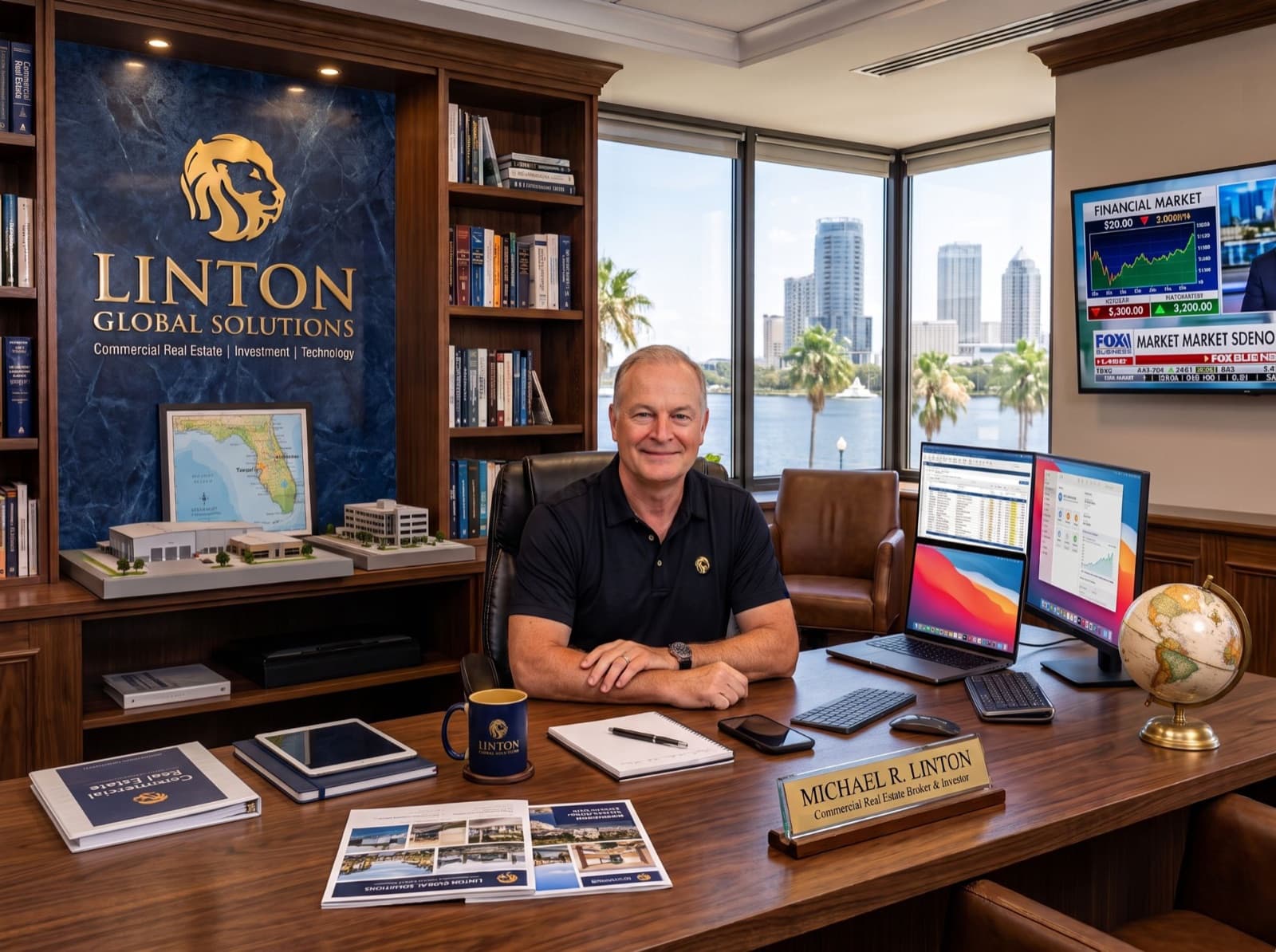
The workflow, led by Michael R. Linton (Florida Broker #BK703722, 39 years of commercial real estate transactions): intake call → acquisition criteria confirmed → criteria-based Downtown Orlando shortlist → tours and diligence support → coordination with your Qualified Intermediary, CPA, attorney, and lender through closing. Useful references: the 1031 Exchange, Boot, and DST glossary entries, plus our Cap Rate and DSCR calculators.
- Service: commercial replacement-property sourcing and underwriting support
- Market: Downtown Orlando, with broader Central Florida searches when the criteria call for it
- Lead broker: Michael R. Linton, Florida Broker #BK703722
- Our role: property search and transaction coordination. We are not your Qualified Intermediary, CPA, or attorney.
- Deliverable: a shortlist built on your confirmed criteria, with every property's availability subject to verification
The 1031 deadlines, and what a shortlist is not
| Milestone | What it means |
|---|---|
| Identification | Generally identify replacement property within 45 days after transferring the relinquished property. |
| Completion | Receive the replacement property by the earlier of 180 days after the transfer or your tax-return due date (including extensions) for that year. |
| Written identification | Identification must be in writing, signed, and delivered to your QI or another permitted party, and must describe the property unambiguously. Our shortlist is a research tool, not formal identification. |
Source: IRS, Like-Kind Exchanges: Real Estate Tax Tips. Confirm your dates and identification method with your QI and CPA.
How we evaluate a Downtown Orlando replacement property
For this guide, Downtown Orlando means the urban core around Lake Eola, the Central Business District, Parramore and Creative Village, and the blocks served by the Church Street SunRail station. When those boundaries are too narrow for your criteria, we say so and widen the search to adjacent submarkets such as Winter Park, the I-4 corridor, and Lake Nona.
| Property type | What we review before it makes a shortlist |
|---|---|
| Multifamily | Trailing operating statements, current rent roll, concessions in use, real estate tax reassessment on sale, insurance cost, and deferred capital needs. |
| Office | Lease rollover schedule, tenant-improvement and leasing-commission exposure, parking ratios, and whether lenders will finance the building at your target leverage. |
| Retail / net lease | Lease structure (NNN vs. gross), tenant credit and guarantees, remaining term, rent escalations, and dependence on event and tourism traffic. |
| Hotel | Brand and management requirements, operating history, property improvement plan obligations, and whether the operating burden fits a passive exchanger. |
| Execution | Seller readiness, diligence access, financing feasibility, and whether the property can realistically close inside your 180-day window. |
What your shortlist contains
- Property or opportunity summary, with asking price or pricing status
- The date we last verified availability
- Basic income and lease information available for review
- Preliminary fit against your acquisition criteria
- Known diligence gaps and potential execution issues
- Recommended next steps
A shortlist is not a guarantee of availability, suitability, or successful exchange treatment. If Downtown Orlando has nothing that fits, we tell you plainly and show you the closest alternatives elsewhere in Central Florida.
Downtown Orlando Property Types We Evaluate
These are the Downtown Orlando property types we evaluate for exchangers. Each card opens our Florida-wide guide for that asset class. When your criteria can’t be met downtown, we expand to the broader Central Florida market (see the Orlando market guide).
Request My Downtown Orlando Replacement-Property Search
Share your sale timeline, target purchase range, preferred property types, financing needs, and management preferences. We confirm the search scope and explain the shortlist process before we begin. Our service target is a shortlist within 72 hours after a completed intake and confirmed criteria.
Frequently Asked Questions — Downtown Orlando 1031 Exchange
Does buying Florida property eliminate the tax I owe my former state?
Not necessarily. Florida has no personal income tax, so future gain on the Florida property is not taxed by Florida. But some states keep tracking gain you deferred on property you sold there. California, for example, requires annual reporting of deferred California-source gain (FTB Form 3840) until it is recognized. Confirm your state’s rules with your CPA.
Is a property shortlist the same as formal 1031 identification?
No. Formal identification must be in writing, signed by you, delivered to your Qualified Intermediary or another permitted party within 45 days, and must describe each property unambiguously. Our shortlist is research that helps you decide what to identify.
What do you need from me before starting a replacement search?
Your relinquished property’s sale price and closing date, the equity and debt you need to replace, your target price range and property types, financing plans, management preferences, and the name of your QI.
How fast can you produce a shortlist?
Our target is 72 hours after a completed intake and confirmed acquisition criteria. If your window is already short, tell us how many days remain and we will say plainly whether the timeline is workable.
What happens if Downtown Orlando has no suitable property?
We tell you, and we show you the closest matches in nearby Central Florida submarkets such as Winter Park, the I-4 corridor, and Lake Nona, or in other property types that fit your criteria.
How do you judge whether a property can close before my deadlines?
We look at seller readiness, diligence access, the financing path and timeline, title and survey issues, and whether the property can realistically close within 180 days of your relinquished-property sale.
What does Linton Global Solutions do, and what is the QI’s or CPA’s job?
We source, underwrite, and help negotiate replacement property and coordinate the transaction. We do not act as your Qualified Intermediary: your agent, including your broker, is generally a disqualified person under the 1031 rules. Your QI holds the exchange funds and documents the exchange; your CPA and attorney advise on tax and legal treatment.
Can I exchange from out-of-state real estate into Downtown Orlando?
Yes. Real property held for investment or business use in the United States is generally like-kind to other U.S. real property, regardless of state or property type. Your former state’s rules on deferred gain still apply.