The Covered Land Play
The Secret Real Estate Strategy That Turns Underperforming Properties Into Wealth-Building Machines
🤖 Ask REOMind.ai about Covered Land Plays:
CREDDS AI: Income Coverage → HBU Analysis → Exit Strategy
Key Takeaways
- A Covered Land Play allows investors to hold land for future, higher-value redevelopment while current tenants or uses "cover" all carrying costs in the interim.
- The cornerstone concept is Highest and Best Use (HBU) — identifying properties not yet operating at their maximum legal, physical, and financially feasible potential.
- Common covered land opportunities include parking lots, single-story retail in urban corridors, aging industrial buildings, obsolete strip malls, and underutilized church or institutional parcels.
- Bridge loans for covered land deals typically carry LTV ratios of 65–80% and interest rates ranging from 8–12%, making interim cash flow critical to viability.
- The 1031 Exchange is a powerful exit tool for covered land investors, allowing tax-deferred reinvestment of sale proceeds into replacement properties.
- Due diligence, zoning research, and entitlement planning are non-negotiable steps — skipping them is the single largest cause of covered land deal failures.
- AI-powered platforms like REOMind.ai are transforming how investors identify, analyze, and act on covered land opportunities at institutional speed and scale.
What Is a Covered Land Play? (The Definitive Definition)
A Covered Land Play is a real estate investment strategy in which an investor purchases a property — not primarily for its current improvements or income — but for the underlying land valueand the potential to redevelop that land into a significantly higher and better use at a future date. The critical qualifying element is that the property's existing income stream must be sufficient to "cover" the investor's carrying costs — including mortgage payments, property taxes, insurance, and operating expenses — during the entire holding period before redevelopment begins.
In plain terms: you are buying the land. The existing building is simply a temporary income engine that funds your patience. For investors exploring this strategy alongside 1031 Exchange tax deferral, the covered land play becomes even more powerful.
This strategy sits at the intersection of income investing and land speculation, creating what investment professionals describe as an asymmetric risk profile. The downside scenario — maintaining break-even cash flow — is acceptable. The upside scenario — a transformative redevelopment that multiplies land value — is potentially exceptional. In today's market, where landlords are defaulting at alarming rates, covered land plays offer a disciplined alternative to speculative land banking.
Expert Insight
"The Covered Land Play is one of the most misunderstood strategies in commercial real estate. Most investors fixate on the building. The sophisticated investor sees right through it to the land beneath."
— Michael R. Linton, NCREA, CREIPS, Commercial Real Estate Broker, Linton Global Solutions, LLC | LintonGlobal.com
The Foundation Principle: Highest and Best Use (HBU)
Every covered land play begins with one question: What is this land's Highest and Best Use?
Appraisers define Highest and Best Use as the reasonably probable use of a property that is:
- Legally permissible — allowed under current or achievable zoning
- Physically possible — supported by the site's size, shape, topography, and utility access
- Financially feasible — generates a positive return after development costs
- Maximally productive — produces the highest land value among all feasible alternatives
When a property's current use falls short of its HBU — a single-story retail strip in a rapidly urbanizing corridor, for instance — the gap between current value and potential value is where the covered land play opportunity lives.
Identifying the HBU Gap
Investors must assess whether the local market, demographic trends, and zoning framework are converging to push a property toward a higher-value use. Key indicators include:
- Rapid population growth and urban infill pressure in the surrounding area
- Rezoning activity or comprehensive plan amendments in adjacent parcels
- Rising land sales of comparable properties to developers
- Declining building utility (aging structures, deferred maintenance, obsolete configuration)
- Proximity to transit, employment centers, medical corridors, or university campuses
The Covered Land Play Strategy: How It Works Step by Step
Step 1 — Identify the Property
Target properties where the land's intrinsic value exceeds the combined value of the existing improvements plus acquisition and carrying costs. Common hunting grounds include:
- Single-story commercial buildings on corner lots in urbanizing corridors
- Aging strip malls and neighborhood retail centers
- Surface parking lots in downtown or near-downtown locations
- Obsolete industrial or warehouse facilities in gentrifying areas
- Underutilized religious or institutional campuses with excess land
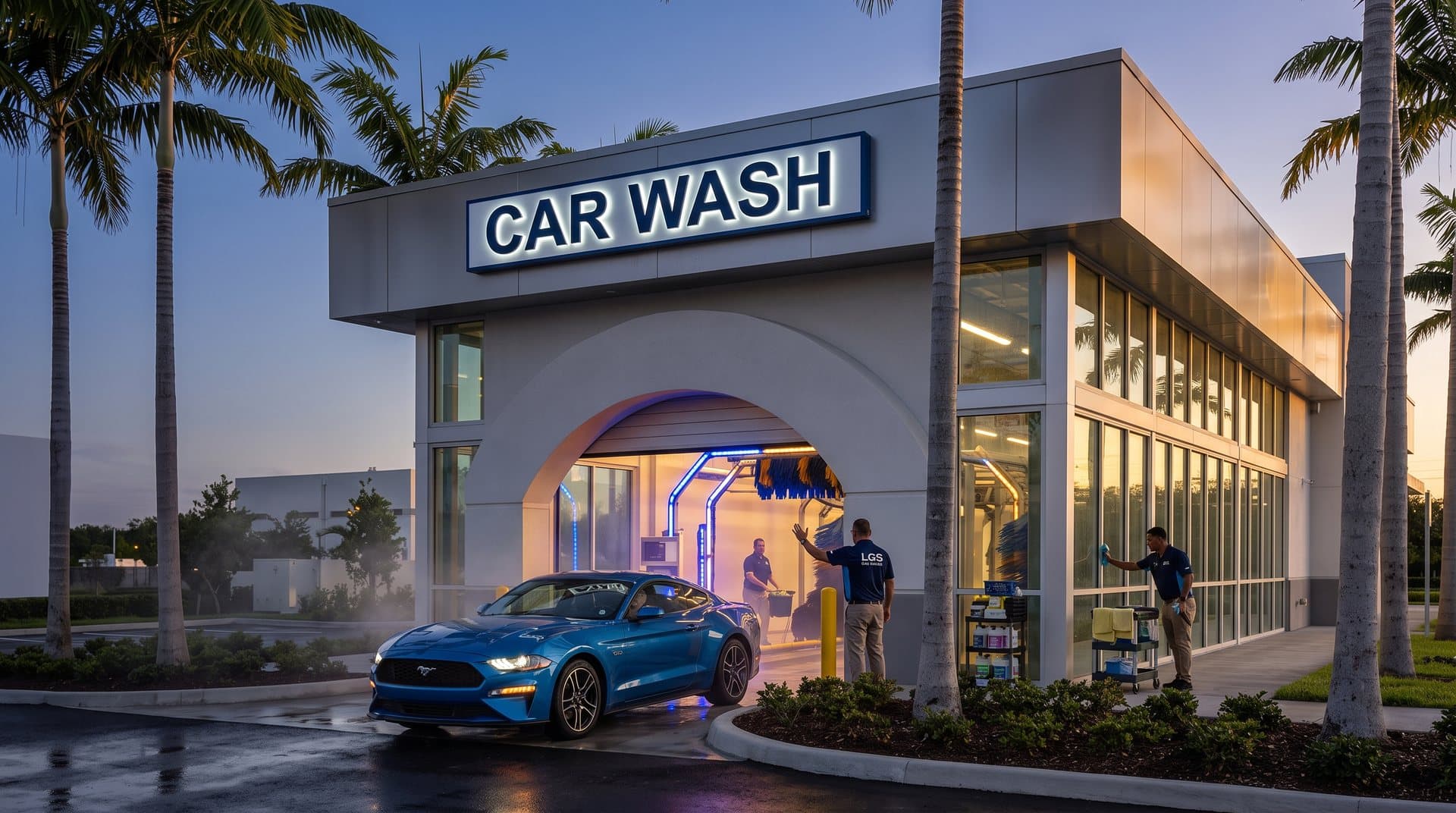
- Auto-oriented properties (car washes, gas stations, drive-throughs) in pedestrian corridors
Step 2 — Verify Covered Cash Flow
Calculate whether existing income covers all holding costs. The core financial test:
Net Operating Income (NOI) = Gross Rental Income − Vacancy Allowance − Operating Expenses
Capitalization Rate (Cap Rate) = NOI ÷ Property Value
For a covered land play to be viable, the NOI must at minimum equal or exceed the sum of debt service, property taxes, insurance, and any required maintenance expenditures. Breaking even — or generating modest positive cash flow — is the target. Strong positive cash flow is the ideal.
Example
A surface parking lot generates $72,000 annually in gross revenue. After a 5% vacancy allowance and $12,000 in operating expenses, the NOI is $56,400. If the acquisition price is $940,000, the going-in cap rate is approximately 6%. If the debt service on a covered land bridge loan is $52,000 annually, the property is cash flow positive at $4,400/year — qualifying it as a covered land play.
Step 3 — Analyze Zoning and Entitlement Path
Zoning due diligence is not optional — it is one of the most critical steps in any commercial acquisition. For Florida-specific guidance, explore our Florida commercial brokerage practice. Investors should:
- Verify current zoning classification via the municipality's GIS mapping tool
- Review the local land development code for allowable uses and development standards
- Confirm alignment between the zoning district and the comprehensive plan's future land use designation
- Investigate whether a rezoning, special use permit, variance, or PUD approval is required to achieve the target HBU
- Negotiate a 30-to-45-day due diligence contingency in the purchase contract to allow for zoning research before commitment
Entitlement timelines range from 6 months (ministerial approvals) to 3+ years for complex rezonings requiring environmental impact reviews, community hearings, and political navigation.
Step 4 — Arrange Financing
Covered land deals occupy a specialized niche in the lending landscape. Traditional permanent lenders often decline because the property's value is speculative and forward-looking. However, bridge lenders and private capital routinely finance covered land acquisitions.
| Loan Type | LTV Range | Interest Rate | Term |
|---|---|---|---|
| Covered Land Bridge Loan | 65–75% | 8–12% | 12–36 months |
| Private / Hard Money | 60–70% | 10–14% | 6–24 months |
| CMBS (if stabilized) | 65–75% | 6–8% | 5–10 years |
| Community Bank Portfolio | 70–80% | 7–9% | 3–7 years |
| SBA 7(a) / SBA 504 | Up to 90% | Prime + spread | 10–25 years (owner-occupied only) |
The income-generating nature of a covered land play is what makes it bankable — a differentiating advantage over raw land purchases, which often require 40–50% down payment and carry speculative underwriting terms. For a deeper dive into financing structures, see our Florida CRE financing guide.
Step 5 — Execute the Hold Strategy
During the holding period, the investor must:
- Actively manage the existing tenants or use to protect NOI
- Continue zoning/entitlement pursuit in parallel
- Monitor the local market for development-trigger events (transit investment, major employer announcement, competitive land sales nearby)
- Build relationships with developers, buyers, and capital partners who will execute or acquire the redevelopment
Holding periods for covered land plays typically range from 3 to 10 years, depending on market cycles, entitlement complexity, and the investor's capital position.
Step 6 — Execute the Exit
Exit strategies include:
- Sell the entitled land to a developer at a significant premium over acquisition price
- Develop directly and hold the completed asset (requires construction financing and development expertise)
- Joint venture with a capital partner or developer who contributes construction capital in exchange for a profit share
- 1031 Exchange the sale proceeds into a replacement property, deferring capital gains taxes under Section 1031 of the Internal Revenue Code (45-day identification window, 180-day closing requirement)
Proven Covered Land Play Property Types
Surface Parking Lots
Parking lots represent perhaps the purest covered land play. They require minimal capital improvement, generate low but predictable income, carry negligible operating expenses, and exist on highly visible, well-located parcels. In urbanizing markets, surface parking lots are frequently the first properties targeted for mixed-use or multifamily redevelopment.
Single-Story Retail and Strip Malls
A single-tenant or small-bay retail building on a large lot in a corridor experiencing density increases is a classic covered land scenario. The tenant generates rent that funds the hold while the investor pursues a rezoning to allow multifamily, mixed-use, or office development.
Obsolete Industrial Buildings (Urban Infill Path)
Industrial buildings in the path of gentrification represent compelling covered land opportunities. The investor acquires at industrial valuations, leases to creative-office, light-industrial, or flex tenants, and waits for the area's density trajectory to justify a repositioning or ground-up redevelopment. Investors may also explore renovation vs. resale strategies for these assets.
Motel, Hotel, and Hospitality Conversions
Aging motels and limited-service hotels on well-located parcels increasingly attract covered land buyers who recognize that the land value exceeds the hospitality business value. The existing rooms generate revenue during the hold period while entitlements are pursued for residential, mixed-use, or senior housing conversion.
Religious and Institutional Properties with Excess Land
This creative strategy involves partnering with or acquiring from religious organizations, schools, or nonprofits that hold large parcels with declining utilization. A joint venture structure can provide the institution with a revenue-share from future development while the developer gains access to irreplaceable, often favorably zoned land.
Adaptive Reuse Candidates
The World Economic Forum's analysis on adaptive reuse notes that converting underutilized buildings simultaneously reduces carbon footprint, preserves community heritage, and generates strong financial returns — often with faster time-to-market than ground-up development. The Urban Land Institute confirms that adaptive reuse projects can yield strong financial returns, spark urban revitalization, and support community culture. In a record year for adaptive reuse, over 25,000 apartment units were converted from existing buildings, with hotels representing 37% of all reuse projects.
Benefits of the Covered Land Play
1. Asymmetric Risk Profile
The covered cash flow floor eliminates the worst-case scenario of pure land speculation — running negative carry for years while waiting for appreciation. The investor is effectively paid to wait.
2. Favorable Financing Access
Lenders respond to income. A property generating positive NOI, even at modest levels, is dramatically more financeable than raw land. Bridge lenders, private capital firms, and in some cases community banks will structure covered land loans at commercially reasonable terms.
3. Multiple Value-Creation Pathways
The investor is not locked into a single exit. The property can be sold as-is, sold with entitlements, developed and sold, developed and held, or contributed to a joint venture — each pathway offering distinct risk-return characteristics.
4. Strategic Patience as Competitive Advantage
Most buyers compete on price for stabilized, fully leased assets. The covered land play requires analytical skill, market foresight, zoning literacy, and patience — characteristics that reduce competition and increase the probability of acquiring at below-intrinsic-value pricing.
5. Tax Efficiency via 1031 Exchange
Upon disposition, investors can deploy a 1031 Like-Kind Exchange to defer capital gains taxes, reinvesting the full proceeds into a replacement property. This powerful tax-deferral mechanism preserves capital for compounding reinvestment and is particularly valuable for covered land plays that generate substantial appreciation gains.
Risk Management Matrix
Overpayment Risk
Overpaying relative to the land's achievable development value — either by applying the wrong cap rate or overestimating the strength of the existing income — is the most common error.
Mitigation: Conduct independent appraisals, commission a feasibility study for the target development program, and underwrite the deal at conservative assumptions.
Tenant Departure Risk
If the existing tenant that provides the income coverage vacates, the property shifts from a covered land play to raw land speculation.
Mitigation: Secure leases with sufficient remaining term to cover the projected entitlement timeline. Vet tenant credit quality. Maintain a capital reserve to absorb a temporary coverage gap.
Zoning and Entitlement Failure Risk
A rezoning denial or regulatory reversal can eliminate the development thesis.
Mitigation: Engage a local land use attorney prior to acquisition. Verify that the target use is supported by the comprehensive plan's future land use designation. Build entitlement contingencies into the acquisition contract.
Market Timing Risk
Development cycles can extend well beyond initial projections. An investor who acquires in a strong market may hold through a contraction before conditions support redevelopment.
Mitigation: Underwrite with conservative holding periods (7–10 years), maintain adequate liquidity, and structure financing with extension options.
Environmental Liability Risk
Certain covered land play candidates — auto-oriented properties, dry cleaners, gas stations — carry potential Phase I and Phase II environmental assessment requirements. Contaminated soils can cost $100 or more per yard to remediate.
Mitigation: Always commission a Phase I Environmental Site Assessment prior to closing. Require seller representations and escrow holdbacks for known or suspected conditions.
Key Financial Metrics Every Covered Land Investor Must Know
Net Operating Income (NOI)
NOI = Gross Rental Income − Vacancy Losses − Operating Expenses
NOI is the central metric for evaluating whether a property qualifies as "covered." It must exceed or equal total carrying costs for the deal to work as a covered land play. For REO investors, understanding NOI is critical — see our Financing REO Acquisitions guide for more.
Capitalization Rate (Cap Rate)
Cap Rate = NOI ÷ Property Value
The going-in cap rate benchmarks the income yield at acquisition. A covered land play typically carries a below-market cap raterelative to stabilized income properties in the same area — reflecting the investor's willingness to accept lower current yield in exchange for future land value appreciation.
The C.L.E.A.R. Covered Land Play Test
Most covered land plays fail for one of five reasons, and all five are knowable before closing. C.L.E.A.R. is the five-signal screen I use to grade a candidate parcel — Cash-Cover, Land Basis, Entitlement runway, Absorption horizon, and Return optionality. It is deliberately ordered: a deal that fails the first signal cannot be rescued by the other four.
A deal that fails Cash-Cover is not a covered land play at all — it is land speculation carrying a building. The building is supposed to pay you to wait. If it does not, you have bought the risk profile of raw land and the maintenance obligations of improved property.
C — Cash-Cover Ratio
Does in-place income service the debt and the carry? This is the signal that defines the strategy, and it is simply debt service coverage measured against total carrying costs rather than debt alone — mortgage, taxes, insurance, and operating expenses. Below 1.0x you are funding the hold out of pocket every month. Underwrite it on the in-place rent roll, never on pro-forma rent you intend to achieve, because the tenant you are counting on may be the reason the seller is selling.
L — Land Basis Ratio
What share of the purchase price is land rather than improvements? Separate the two before you bid. The higher the land share, the more genuinely the deal is a land play — and the less you are paying for a structure you intend to demolish. Paying a stabilized cap rate for the building and full land value for the dirt means paying twice for the same parcel.
E — Entitlement Runway
How long does the rezoning path realistically take, and does the income survive that long? Compare the entitlement timeline against the remaining lease term, not against your patience. A three-year rezoning under a lease with eighteen months left is not a runway — it is a gap you will finance yourself, and the moment the tenant leaves the deal stops being covered.
A — Absorption Horizon
Can the market absorb the redeveloped use when you are ready to exit, or will you be the fourth identical project delivering into the same submarket? Entitlements are granted on the merits of the parcel; absorption is decided by everything else being built around it. Check the pipeline, not just the comparables.
R — Return Optionality
How many exits does the parcel support if the primary thesis fails? A site that works only as one specific use, at one specific density, for one specific buyer, carries concentration risk regardless of how strong that single outcome looks. Optionality is what turns a rezoning denial from a loss into a delay — and it is usually a function of parcel size, frontage, and access rather than anything you can negotiate later.
Advanced Strategy: Creative Covered Land Structures
Joint Venture with Property Owners
One of the most capital-efficient covered land approaches involves identifying property owners who hold underutilized or excess land partnering with them rather than acquiring outright. The developer contributes expertise, entitlement work, and capital partner relationships. The landowner contributes the parcel. Both parties share in the development upside — creating a win-win structure that requires minimal investor capital at entry.
Religious and Institutional Land JV
Religious organizations and nonprofits frequently own large, underutilized parcels in prime locations. A joint venture — wherein the institution retains a revenue share from future development while the developer leads entitlements and construction — has produced some of the most creative covered land play transactions in urban markets, particularly in growing Sun Belt cities.
Subdivision and Phased Development
Large parcels with existing income-generating structures can be strategically subdivided. The investor retains the income-producing building on one parcel while developing adjacent land in phases. This approach extends the covered period across the entire project, reducing risk through incremental execution.
Become Your Own Tenant
A property owner can occupy a vacant building intended for future redevelopment, effectively becoming the tenant. This reduces external rental costs, generates operational value, and in certain configurations allows access to SBA 7(a) or SBA 504 financing for building improvements — leveraging government-backed capital to enhance the property while the redevelopment timeline matures.
Covered Land Plays in the Chicago and Florida Markets
Michael R. Linton has identified and executed covered land play strategies across both the Chicago metropolitan market and Florida's high-growth Sun Belt markets. Chicago's commercial landscape continues to evolve, with suburban office vacancies creating natural covered land candidates — buildings that cannot justify traditional office repositioning but sit on parcels well-suited for industrial, data center, or mixed-use redevelopment. Meanwhile, Florida's growth corridors — Tampa Bay, Orlando, Jacksonville, and South Florida — present a continuous pipeline of covered land opportunities driven by population migration, infrastructure investment, and urban infill pressure. Read the Florida CRE Market Outlook for current market data.
In both markets, the integration of AI-powered analysis through REOMind.ai — Michael Linton's proprietary platform powered by the CREDDS AI system— enables investors to identify covered land candidates at scale. REOMind.ai's five specialized AI agents analyze properties, validate income coverage ratios, assess market positioning, and match qualified investors with appropriate opportunities — the same screening work described above, run across a far larger candidate set than a broker can review by hand. REO and distressed assets frequently qualify as covered land plays, which is why the platform's intake is pointed at them.
Contact Michael R. Linton
Michael R. Linton, NCREA, CREIPS, REALTOR®
Florida Real Estate Broker #BK703722 | Illinois Real Estate Broker #475.211120
Commercial Real Estate Broker | Linton Global Solutions, LLC
Cell: (312) 612-1031
📘 Unveiling the Secrets of the Covered Land Play Strategy
NCREA = National Commercial Real Estate Advisor | CREIPS = Certified Real Estate Investment Property Specialist — thencrea.com
Due Diligence Checklist for Covered Land Play Investments
Thorough due diligence separates profitable covered land plays from costly mistakes. Use this checklist before committing capital. For a comprehensive framework, see our Due Diligence for Distressed Properties guide.
Financial Due Diligence
- Obtain 3 years of operating statements and tax returns from seller
- Verify all rent rolls and lease expiration dates
- Calculate NOI and confirm it equals or exceeds total carrying costs at target leverage
Zoning and Entitlement Due Diligence
- Verify zoning classification via municipal GIS map
- Review land development code for permitted uses, development standards, and overlay districts
- Confirm consistency with comprehensive plan future land use designation
- Identify required approvals (rezoning, special use permit, variance, platting) and timeline
- Consult local land use attorney for assessment of entitlement risk
- Negotiate 30–45-day due diligence contingency period
Environmental Due Diligence
- Commission Phase I Environmental Site Assessment (ASTM E1527-21 standard)
- Evaluate historical uses for contamination risk (auto-oriented, industrial, dry cleaning)
- Order Phase II Environmental Assessment if Phase I identifies Recognized Environmental Conditions (RECs)
- Check for FEMA flood zone designation and floodplain development restrictions
Market and Development Due Diligence
- Analyze comparable land sales for target use (per-acre, per-SF land values)
- Research pipeline development projects in the submarket
- Commission a preliminary feasibility study for the target development program
🤖 Ask REOMind.ai about Covered Land Plays:
CREDDS AI: Income Coverage → HBU Analysis → Exit Strategy
Frequently Asked Questions
Works Cited
Abrams Law. "Zoning Due Diligence: A Critical Step in Redevelopment." Abrams Law, 27 Dec. 2024, https://abrams-law.com/zoning-due-diligence-a-critical-step-in-redevelopment/.
American Association of Private Lenders. "Understanding the Entitlements Portion of Due Diligence." AAPL Online, 3 Feb. 2022, https://aaplonline.com/articles/operations/understanding-the-entitlements-portion-of-due-diligence/.
Bongolan, Huber, and Tim Milazzo. "Understanding the 'Covered Land Play' Strategy in Real Estate Investing." StackSource Blog, 15 Mar. 2022, https://blog.stacksource.com/understanding-the-covered-land-play-strategy-in-real-estate-investing-4c3600e2de0f.
C2R Capital. "The Land Development Financing Playbook: Why Private Capital Wins When Banks Won't." C2R Capital Insights, 22 Feb. 2026, https://www.c2rcapital.com/insights/the-land-development-financing-playbook-why-private-capital-wins-when-banks-won-t.
Cara Conde Real Estate. "The Ultimate Guide to NOI in Commercial Real Estate." caraconde.com, 23 Mar. 2025, https://caraconde.com/blog/the-ultimate-guide-to-noi-in-commercial-real-estate.
Ferriss, Anne. "What's Old Is New: The Business Case for Urban Adaptive Reuse." Urban Land Institute, 22 June 2025, https://urbanland.uli.org/resilience-and-sustainability/whats-old-is-new-the-business-case-for-urban-adaptive-reuse.
Franklin, Sarah. "Adaptive Reuse Can Help Reimagine, Repurpose and Revitalize Cities." World Economic Forum, 29 Apr. 2025, https://www.weforum.org/stories/2025/04/how-adaptive-reuse-can-help-reimagine-repurpose-and-revitalize-cities/.
HelloData. "What Is a Covered Land Play?" HelloData Help Articles, https://www.hellodata.ai/help-articles/what-is-a-covered-land-play.
J.P. Morgan. "Calculating Net Operating Income (NOI) & Cash Flow." J.P. Morgan Commercial Real Estate, 14 Aug. 2024, https://www.jpmorgan.com/insights/real-estate/commercial-term-lending/calculating-net-operating-income-and-cash-flow.
JRH Engineering & Environmental Services. "Key Due Diligence Steps for Land Development Projects." JRH Engineering, 26 Oct. 2025, https://www.jrhengineering.net/post/key-due-diligence-steps-for-land-development-projects.
Kearny Bank. "1031 Exchanges: Key Benefits to Commercial Real Estate Investors." Kearny Bank Insights, 3 Mar. 2026, https://www.kearnybank.com/the-vault/1031-exchanges-key-benefits-to-commercial-real-estate-investors.
Linton, Michael R. Unveiling the Secrets of the Covered Land Play Strategy in Investing. Amazon KDP, 2024, https://www.amazon.com/Unveiling-Secrets-Covered-Strategy-Investing/dp/B0DF7HNRXK.
LoanBase. "The Covered Land Play: A Deep Dive into Real Estate Strategy." LoanBase, 7 Nov. 2023, https://loanbase.com/cre-loans/the-covered-land-play-a-deep-dive-into-real-estate-strategy/.
NAIOP. "Adaptive Reuse Hits Record 25K Apartments in 2024." NAIOP Blog, 1 Dec. 2025, https://blog.naiop.org/2025/12/adaptive-reuse-hits-record-25k-apartments-in-2024/.
National Commercial Real Estate Advisors. NCREA Certification Overview. https://www.thencrea.com/.
Private Lender Link. "Covered Land Bridge Loans." Private Lender Link, 6 July 2023, https://privatelenderlink.com/2021/07/covered-land-bridge-loans/.
REOMind.ai. "AI-Powered REO Disposition Intelligence." REOMind.ai, https://reomind.ai.
Disclosures
Disclosure: This article discusses proprietary technology developed by Linton Global Technologies. Michael R. Linton is the founder of Linton Global Technologies and a licensed real estate professional with Linton Global Solutions, LLC. This content is for informational purposes only and does not constitute investment, legal, or financial advice.
Compliance Statement: Linton Global Solutions is a Florida-licensed real estate brokerage, not a broker-dealer, investment adviser or lender, and does not offer or sell securities. CREDDS and REOMind.ai provide decision support only. Readers should conduct their own due diligence and consult with qualified professionals before making investment decisions.
Data and Performance Provenance:Institution-level bank and servicer data referenced in connection with REOMind.ai is sourced from the FDIC's public BankFind API. Financial formulas presented in this article — NOI, cap rate, debt service coverage, and the five C.L.E.A.R. signals — are standard commercial real estate calculations, shown with their inputs so any figure can be reproduced from a reader's own numbers. Platform throughput, match-accuracy and disposition-timeline metrics are internally measured, reflect Linton Global Technologies' own deal set, have not been independently audited, and are therefore not cited on this page. Nothing here is a projection or guarantee of results.
© REOMind.ai | LintonGlobal.com | Michael R. Linton, NCREA, CREIPS, REALTOR® | All rights reserved.