Michael R. Linton, Florida Broker #BK703722, advises investors on land, industrial, multifamily and retail property across Orlando, Lake Nona, Winter Garden and the I-4 corridor through Linton Global Solutions.
Watch the film
The Swamp That Became a Metro (2:46). A Linton Global Solutions film, drawn entirely in code over OpenStreetMap data, with archival photographs from the State Archives of Florida and the Library of Congress.
Full video transcript: The Swamp That Became a Metro
1838. The Second Seminole War. The U.S. Army builds a fort among the lakes of Central Florida: Fort Gatlin. The soldiers leave. The settlers stay. They call the place Jernigan.
1875. It incorporates as the Town of Orlando. 85 residents. 22 voters.
Then citrus. Groves ring the lakes, and the town gets rich on oranges. Until the winter of 1894. Two freezes, six weeks apart. More than 21,000 acres of groves, and not one box of fruit. The growers move south. Orlando has to find a new reason to exist.
It takes 60 years. 1957: the Martin Company builds a missile plant south of town. A road is paved to reach it. Today you know it as Sand Lake Road.
Then Florida’s Turnpike. Then Interstate 4. Two highways cross just southwest of town. Orlando becomes the crossroads of the state.
And somebody starts buying swamp. Through a string of front companies. Parcel by parcel. More than 27,000 acres, about 43 square miles, for just over $5 million. Nobody knows who. Until October 1965, when the Orlando Sentinel names the mystery buyer.
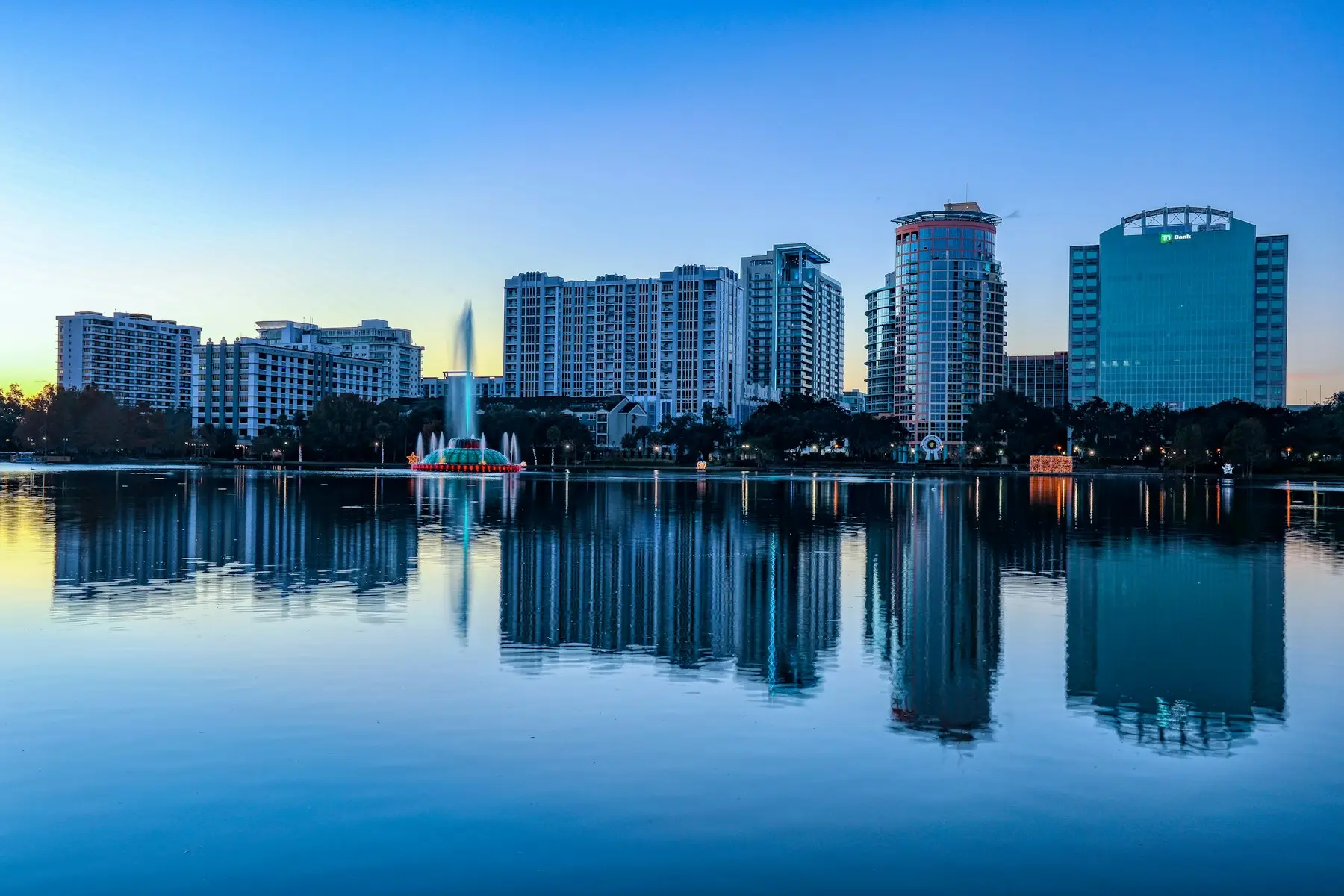
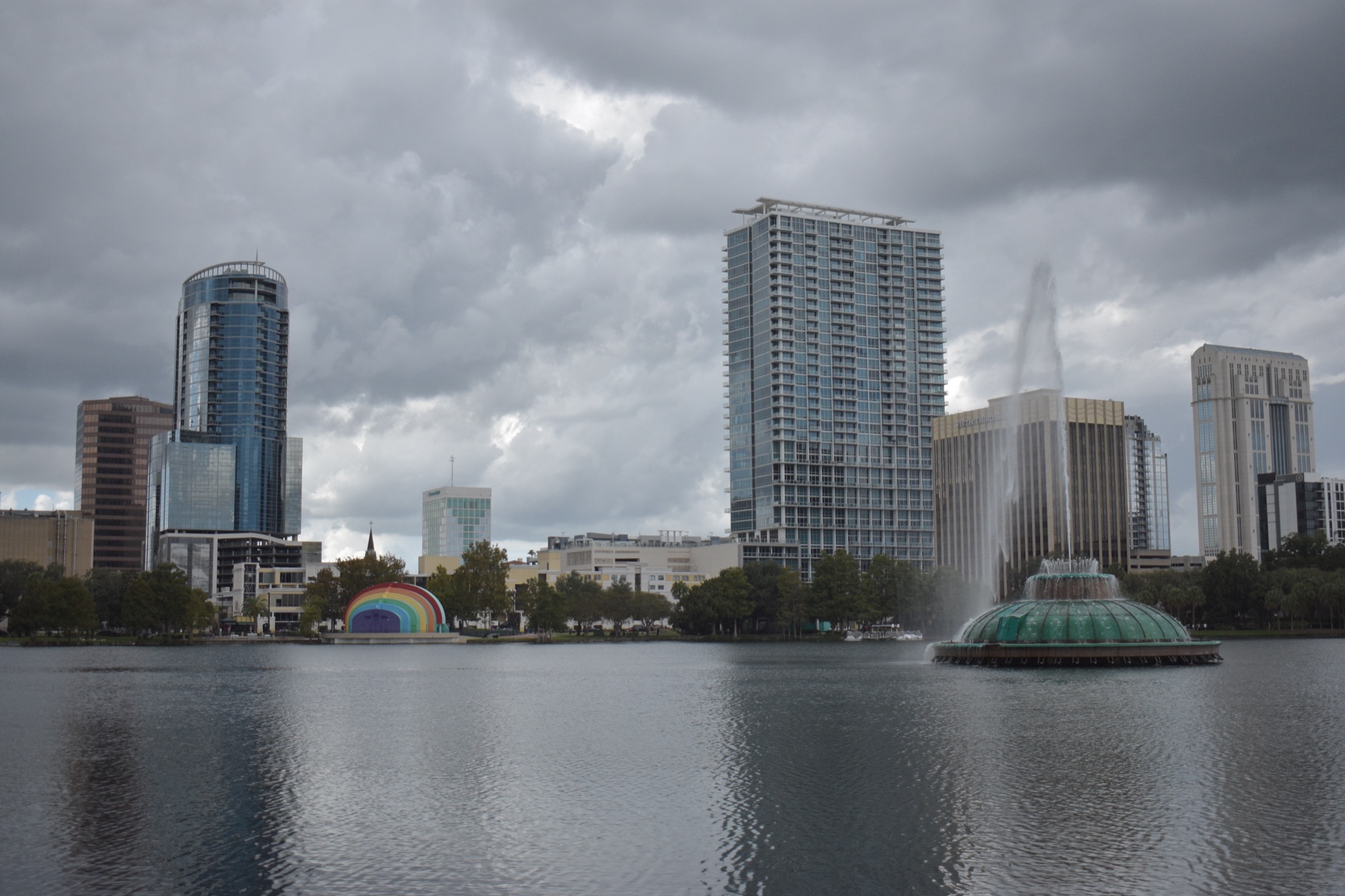
November 15, 1965. The Cherry Plaza Hotel, on Lake Eola. Walt Disney confirms it. Six years later, the gates open.
The old Air Force base at McCoy becomes a jetport, then Orlando International. The code never changed.
Today, nearly 3 million people live in metro Orlando. In 2025, 76.7 million visitors came, more than any other place in America. Downtown. Winter Park. International Drive. Lake Nona. Winter Garden.
It started as a fort site. Every chapter since has been a decision about land. And the next chapter is being written right now: on the I-4 corridor, in Lake Nona, in Winter Garden, parcel by parcel. The people who understood the land made Orlando. They still do.
Linton Global Solutions. A commercial advisor who thinks like a banker.
Every chapter of Orlando’s growth was a decision about land. The fort site, the groves, the missile plant, the interchange, the swamp. If you want to know where value goes next in Central Florida, study who is assembling land and where the next road goes.
The short answer: how did Orlando grow?
Orlando grew through a chain of land decisions. A U.S. Army fort in 1838 drew settlers. Citrus made the town rich until the freezes of 1894–95 wiped out the groves. A missile plant in 1957 and the crossing of Florida's Turnpike and Interstate 4 in the 1960s made Orlando the crossroads of the state. Then more than 27,000 acres of swamp were bought quietly through front companies, and Walt Disney World opened in 1971. Today metro Orlando has nearly 3 million residents.
1838: a fort among the lakes
Orlando begins as a military site. During the Second Seminole War, the U.S. Army established Fort Gatlin on November 9, 1838, south of today's downtown among the small lakes of Central Florida. The soldiers left, but the settlers stayed. By 1850 the community had a post office and a name: Jernigan.
In 1875 the settlement incorporated as the Town of Orlando, with 85 residents, 22 of them qualified voters, according to the City of Orlando. For an investor, the lesson starts here: a site that is easy to reach and defend becomes the center that everything else measures distance from.
Citrus, then the freeze
Citrus came next. Groves ringed the lakes, and the town grew rich on oranges. Then came the winter of 1894–95. Two freezes, on December 29, 1894, and February 7, 1895, destroyed the crop: more than 21,000 acres of groves and, as the Orange County Regional History Center recounts, not one box of fruit. Growers moved their operations south, and the citrus belt moved with them.
The freeze is the first great repricing in Orlando's history. Land that had been valued for one use lost that use overnight. It took about sixty years for Orlando to find its next one, a reminder that land is only worth what its best available use will pay.
A missile plant and a crossroads
In 1957 the Martin Company opened a missile plant at Sand Lake Road and Orange Blossom Trail, about four miles south of downtown. Florida Governor LeRoy Collins dedicated it on December 4, 1957, according to the State Archives of Florida. A road was paved to reach it; today you know it as Sand Lake Road.
Then the highways arrived. Florida's Turnpike reached Orlando in 1963 and 1964, and Interstate 4 opened through downtown in March 1965. The two crossed southwest of town, and Orlando became the crossroads of the state. In commercial real estate terms, the interchange turned remote acreage into land a truck, a tourist or a commuter could reach in minutes.
I tell owners the same thing the history tells us. Roads come before rents. When a new interchange, airport expansion or rail stop is announced, the land around it starts repricing years before the first tenant signs.
Somebody buys the swamp
In the early 1960s, buyers began acquiring land southwest of the new interchange through a string of front companies with names like Bay Lake Properties, Ayefour Corp. and Tomahawk Properties. Parcel by parcel, they assembled about 27,443 acres, roughly 43 square miles, for just over $5 million. Sellers did not know who was buying.
In October 1965 the Orlando Sentinel named the mystery buyer: Disney. On November 15, 1965, at the Cherry Plaza Hotel on Lake Eola, Walt Disney confirmed it, alongside his brother Roy and Florida Governor Haydon Burns. Six years later, on October 1, 1971, the gates of Walt Disney World opened, as described in The Walt Disney Company's history.
This is the clearest lesson in the story. The value did not come from any single parcel; it came from assembling thousands of acres nobody wanted into one site large enough to plan as a whole. Land assemblage is still one of the most reliable ways to create value in Florida commercial real estate.
The biggest land deal in Orlando’s history was an assemblage. Thousands of acres nobody wanted, bought quietly, parcel by parcel, then planned as one site. That is still how value gets created along the I-4 corridor: the whole is worth more than the parts.
McCoy becomes MCO
The old McCoy Air Force Base shared its runways with a civilian jetport in the 1960s. The Air Force left in 1975, and in 1976 the airport was renamed Orlando International. The code never changed: MCO still stands for McCoy. The airport is now one of the reasons Lake Nona, southeast Orange County and the industrial submarkets near SR 528 keep growing.
Metro Orlando today
Metro Orlando had an estimated 2,957,672 residents on July 1, 2025, according to U.S. Census Bureau estimates reported by the Orlando Economic Partnership. In 2025 the region welcomed a record 76.7 million visitors, more than any other U.S. destination, according to Visit Orlando.
The growth now runs through five submarkets you can see on the film's final map: Downtown Orlando, Winter Park, International Drive, Lake Nona and Winter Garden. Each one follows the same pattern as the history: access first, then land, then an anchor use, then everything else.
What Orlando's history teaches investors
Who is Michael R. Linton and what does he do for investors? Michael R. Linton is a Florida-licensed commercial real estate broker and advisor based in the Tampa–Orlando I-4 corridor, serving investors, owners and tenants across Florida, with a focus on Orlando, Tampa and surrounding markets, and expertise across multifamily, office, industrial, retail, hospitality, land, mixed-use, special-purpose, self storage and life sciences properties.
- Roads come before rents. Sand Lake Road, the Turnpike and I-4, and the airport each repriced the land around them years before tenants arrived. Track new interchanges, road widenings and rail stations.
- Assemblage creates value. Combining small parcels into one site can be worth far more than the parts. Our Florida land guide covers how to price land backward from what can be built.
- Uses change; land stays. The freeze ended citrus, not Orlando. A property's value rests on its best available use, which is why we underwrite every deal on what the next buyer can do with the site.
- Anchors pull growth. A plant, a park, a medical city or an airport brings jobs, then housing, retail and logistics around it. That is the story of Lake Nona today.
Why choose Michael R. Linton and Linton Global Solutions? We read a market the way this film reads Orlando: by following the land decisions. We price property with recorded sales, income and lender math, and we know which buyers are active in each Orlando submarket right now. Learn more about our Florida commercial brokerage, or check what nearby buildings sold for on the Florida Market Map.
Timeline: Orlando from 1838 to today
| Year | Event | What happened |
|---|---|---|
| 1838 | Fort Gatlin | The U.S. Army builds a fort among the lakes during the Second Seminole War. Settlers stay and call the place Jernigan. |
| 1875 | Town of Orlando | Incorporated with 85 residents and 22 voters. |
| 1894–95 | The Great Freeze | Two freezes six weeks apart. More than 21,000 acres of groves, and not one box of fruit. Growers move south. |
| 1957 | The Martin plant | A missile plant opens south of town. The road paved to reach it is today’s Sand Lake Road. |
| 1963–65 | Turnpike meets I-4 | Florida’s Turnpike reaches Orlando and I-4 opens through downtown. The two cross southwest of town. |
| 1965 | The swamp purchase | More than 27,000 acres bought through front companies. The Sentinel names Disney in October; Walt Disney confirms it on November 15. |
| 1971 | The gates open | Walt Disney World opens on October 1. |
| 1976 | McCoy becomes MCO | The old Air Force base is renamed Orlando International. The code never changes. |
| Today | A metro | Nearly 3 million residents and a record 76.7 million visitors in 2025, the most of any U.S. destination. |
Flashcards: How Orlando Was Built
Study mode · 14 flash cards
How Orlando Was Built Flash Cards
14 cards. Tap to flip.
0 got it · 0 learning
All 14 flash cards as text
Orlando history
- What U.S. Army fort was built near today’s Orlando in 1838?
- Fort Gatlin, established November 9, 1838, during the Second Seminole War.
- What was the settlement called before Orlando?
- Jernigan.
- When was the Town of Orlando incorporated, and how big was it?
- 1875, with 85 residents, 22 of them qualified voters.
- What ended Orlando’s first citrus boom?
- Two freezes, December 1894 and February 1895. More than 21,000 acres of groves produced no fruit, and growers moved south.
- When did Walt Disney confirm the Florida project, and where?
- November 15, 1965, at the Cherry Plaza Hotel on Lake Eola.
- When did Walt Disney World open?
- October 1, 1971.
What drove growth
- What company built a missile plant south of Orlando in 1957?
- The Martin Company, at Sand Lake Road and Orange Blossom Trail.
- Which two highways crossing made Orlando a crossroads?
- Florida’s Turnpike (reached Orlando 1963–64) and Interstate 4 (opened through downtown in 1965).
- How much land was bought for Walt Disney World?
- About 27,443 acres, roughly 43 square miles, for just over $5 million.
- What does MCO stand for?
- McCoy Air Force Base, the airport’s origin. It became Orlando International in 1976.
- How many people live in metro Orlando?
- 2,957,672 (Census estimate, July 1, 2025).
Lessons for investors
- What is a land assemblage?
- Buying neighboring parcels and combining them into one larger site that is worth more than the parts.
- Why does infrastructure come before value?
- New roads, interchanges and airports make land reachable, so buyers and tenants follow and land reprices.
- Where is Orlando growing today?
- Lake Nona, Winter Garden and Horizon West, and the I-4 corridor.
About Michael R. Linton
Michael R. Linton, NCREA, CREIPS, REALTOR®, is a Florida-licensed real estate broker (#BK703722) and the founder of Linton Global Solutions. He has 39 years in real estate and spent about 15 years managing a mortgage company and originating loans, which is why Linton Global Solutions describes itself as a commercial advisor who thinks like a banker. He advises owners, investors and banks on sales, acquisitions, bank-owned property and 1031 exchanges across every major asset class in Orlando, Tampa and the I-4 corridor.
Linton Global Solutions leads with service: market data, guides and films like this one are published openly, because teaching the market is how trust is earned.
Frequently asked questions
How did Orlando grow from a swamp into a major metro?
Through a chain of land decisions. A U.S. Army fort in 1838 drew settlers, citrus made the town rich until the freezes of 1894–95, the Martin Company missile plant in 1957 and the crossing of Florida’s Turnpike and Interstate 4 made it a crossroads, and the secret purchase of more than 27,000 acres southwest of town in the 1960s brought Walt Disney World, which opened in 1971. Metro Orlando now has nearly 3 million residents.
How much land did Disney buy in Central Florida, and how?
About 27,443 acres, roughly 43 square miles, for just over $5 million by October 1965. The land was bought through a string of front companies so sellers would not know who the buyer was. The Orlando Sentinel identified Disney as the buyer in October 1965, and Walt Disney confirmed it at a press conference at the Cherry Plaza Hotel on Lake Eola on November 15, 1965.
Why is Orlando’s airport code MCO?
MCO stands for McCoy Air Force Base. The base’s runways were shared with a civilian jetport in the 1960s, the Air Force left in 1975, and the airport was renamed Orlando International in 1976. The code never changed.
What can commercial real estate investors learn from Orlando’s history?
Value follows access and assembled land. Sand Lake Road, the Turnpike and I-4 interchange, and the airport each turned cheap land into a growth corridor, and the largest single gain came from quietly assembling thousands of parcels into one site. Investors still look for the next road, interchange or rail line, and for land that can be combined into a larger site.
Where is Orlando growing now?
Lake Nona around the medical city and the airport, Winter Garden and Horizon West in west Orange County, and the I-4 corridor between Tampa and Orlando. These are the same patterns as the past: new roads, an airport, and large tracts that can be planned as a whole.
How do I choose a commercial real estate broker for Orlando or the I-4 corridor?
Choose a Florida-licensed broker who can underwrite a deal the way a lender will, knows recorded sales and zoning in your county, and can explain why buyers price a property the way they do. Ask how they would market your property and which buyers are active right now.
How does Linton Global Solutions help Orlando investors and owners?
Linton Global Solutions is a Florida commercial real estate brokerage led by Michael R. Linton, Florida Broker #BK703722. We help owners sell, investors buy, and banks dispose of commercial property across Orlando, Tampa and the I-4 corridor, in every asset class from multifamily and industrial to retail and land. Call (312) 612-1031.
Article Summary
Orlando grew from Fort Gatlin, a U.S. Army post established in 1838, into a metro of nearly 3 million people through a series of land decisions: citrus until the freezes of 1894–95, the Martin Company plant in 1957, the crossing of Florida’s Turnpike and I-4 in the 1960s, the assemblage of about 27,443 acres for Walt Disney World, which opened in 1971, and the conversion of McCoy Air Force Base into Orlando International (MCO). Michael R. Linton, Florida Broker #BK703722, and Linton Global Solutions apply the same lens to Orlando commercial real estate today: access, land, assemblage and anchor uses.
Key Takeaways
- ✓Fort Gatlin was established on November 9, 1838; the Town of Orlando incorporated in 1875 with 85 residents and 22 voters.
- ✓The freezes of December 1894 and February 1895 ended the first citrus boom and pushed growers south.
- ✓The 1957 Martin plant, the Turnpike (1963–64) and I-4 (1965) made Orlando the crossroads of Florida.
- ✓About 27,443 acres were assembled through front companies for just over $5 million; Walt Disney confirmed the project on November 15, 1965.
- ✓MCO stands for McCoy Air Force Base; the airport was renamed Orlando International in 1976.
- ✓Metro Orlando had 2,957,672 residents in July 2025 and a record 76.7 million visitors in 2025.
- ✓For investors: roads come before rents, and assembled land is worth more than its parts.
About Michael R. Linton

Michael R. Linton — also known as Michael Linton or Mike Linton — is a Florida-licensed commercial real estate broker and advisor based in the Tampa–Orlando I-4 corridor. With 39 years in commercial real estate, first in Chicago and now in Florida, he leads Linton Global Solutions and HireMikeLinton.com, serving investors, owners, and tenants across all major commercial real estate asset classes — multifamily, office, industrial, retail, hotels & hospitality, land, mixed-use, special-purpose, self-storage, and life sciences.
Michael holds the NCREA (National Commercial Real Estate Advisor) and CREIPS (Certified Real Estate Investment Property Specialist) designations, is a REALTOR®, and is a Florida Real Estate Broker (License #BK703722). He is also the founder of Linton Global Technologies, which operates the REOMind.ai AI-powered REO disposition platform serving a network of banks.
Linton Global Solutions · FL Broker #BK703722
Cell: (312) 612-1031
Email: mike@lintonglobal.com
Web: LintonGlobal.com
Ready to Talk About Your Orlando Growth History Deal?
Get a free consultation with Michael R. Linton — 39 years of CRE experience. Zero pressure.
Schedule a Free ConsultationWorks Cited
- City of Orlando. "History of Orlando." City of Orlando, https://www.orlando.gov/Our-Government/History. Accessed Nov 18, 2026.
- Florida Department of State. "November 9, 1838: Fort Gatlin Established." Florida Department of State, https://www.myfloridahistory.org/date-in-history/november-09-1838/fort-gatlin-established. Accessed Nov 18, 2026.
- State Archives of Florida. "Martin Marietta Electronics and Guided Missile Plant, Orlando." Florida Memory, https://www.floridamemory.com/items/show/94400. Accessed Nov 18, 2026.
- State Archives of Florida. "Walt Disney, Governor Haydon Burns and Roy Disney at the Florida Project Press Conference, 1965." Florida Memory, https://www.floridamemory.com/items/show/80371. Accessed Nov 18, 2026.
- Orlando Economic Partnership. "Orlando Population Growth Again Among Highest in Nation." Orlando Economic Partnership, https://news.orlando.org/blog/orlando-population-growth-again-among-highest-in-nation/. Accessed Nov 18, 2026.
- Visit Orlando. "Orlando Welcomed Record 76.7 Million Visitors in 2025." Visit Orlando, https://www.visitorlando.com/media/press-releases/. Accessed Nov 18, 2026.
Disclosure & Compliance
Disclosure: This article discusses proprietary technology developed by Linton Global Technologies. Michael R. Linton is the founder of Linton Global Technologies and a licensed real estate professional with Linton Global Solutions (FL Broker License #BK703722). This content is for informational purposes only and does not constitute investment, legal, or financial advice.
Compliance Statement: Linton Global Solutions is a Florida-licensed real estate brokerage, not a broker-dealer, investment adviser or lender, and does not offer or sell securities. CREDDS and REOMind.ai provide decision support only. Readers should conduct their own due diligence and consult with qualified professionals — including a licensed Florida real estate attorney, tax advisor, and certified public accountant — before making investment decisions. Past performance does not guarantee future results.
This is an independent history. It is not affiliated with or endorsed by The Walt Disney Company. This article is general information, not investment, legal or tax advice. Michael R. Linton, Florida Broker #BK703722.